The application of AI in HR is no longer a future trend: it is a present and essential reality for organizations that want to attract, retain, and develop talent efficiently and intelligently.
In an increasingly complex corporate landscape, artificial intelligence has emerged as a strategic resource for optimizing decisions, automating processes, and promoting more humane and effective people management.
Contents
What is AI in HR and why does it matter now?

Artificial intelligence in HR refers to the use of technologies capable of simulating human capabilities, such as data analysis, decision-making, and natural language processing, applied to human resources processes.
These solutions range from automated resume screening systems to AI agents that track the employee journey in real time.
With the exponential growth in the volume of organizational data and the pressure for agility in decision-making, traditional HR is at a breaking point. AI emerges as a direct response to the need for scalability, personalization, and efficiency.
How AI is being used in talent management.
The role of AI in HR goes far beyond automating repetitive tasks. Currently, companies use AI to extract predictive insights, promote personalized onboarding, measure organizational climate, and improve the employee experience from start to finish.
Recruitment and selection with AI
AI tools can analyze large volumes of resumes based on skills, experience, and cultural fit. This reduces hiring time and increases the accuracy in selecting the ideal candidate.
LinkedIn, for example, uses AI algorithms to recommend candidates based on behavioral and career data. Learn more at [link to LinkedIn article]. official report from LinkedIn Talent Solutions.
Smart onboarding and integration
AI allows you to automate the onboarding process with customized checklists, bots to answer frequently asked questions, and automatic training scheduling.
Tools like Workday it's the SuccessFactors These solutions are already being implemented on a large scale. If you want to put this into practice, learn more about our... Agents Course with OpenAI.
Development and predictive learning
AI-based learning platforms can recommend learning paths tailored to each employee's profile and performance. This enhances individual development and increases talent retention.
One example is the use of AI for LXP (Learning Experience Platforms), as discussed in... McKinsey's Future of Work report.
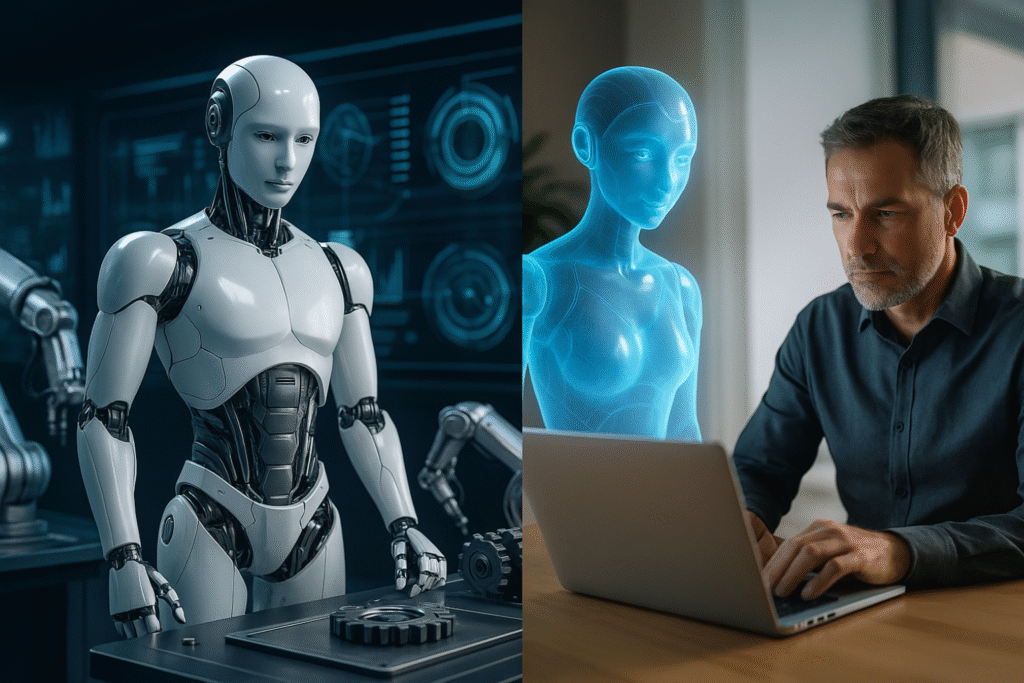
AI Agents vs. Assistants: Understand the Difference
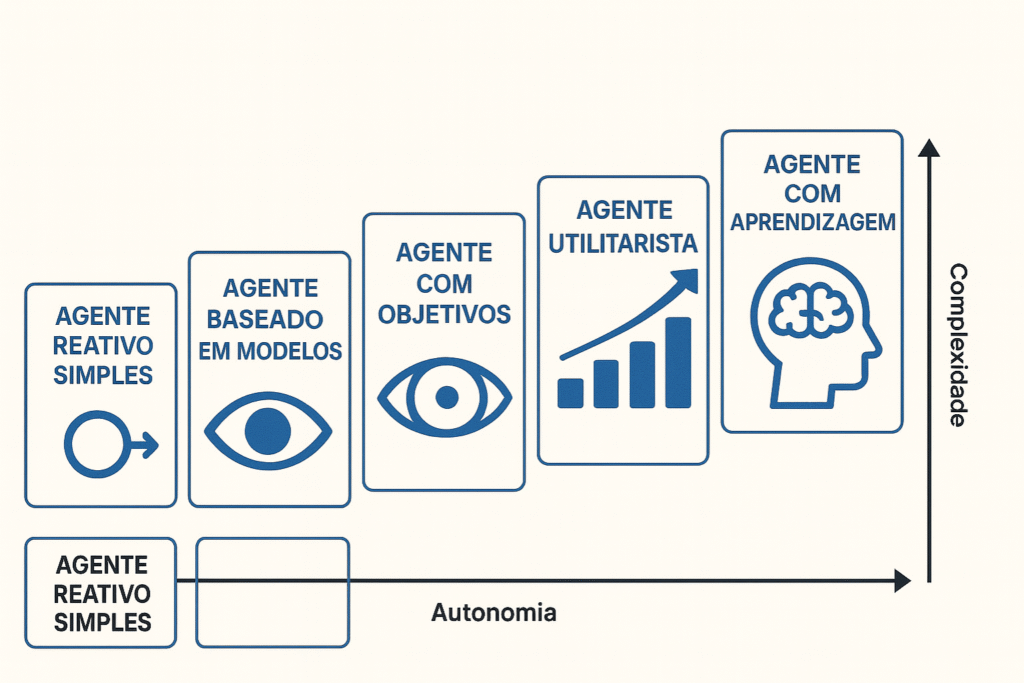
It's common to confuse AI agents with virtual assistants. While assistants execute commands on demand, agents possess autonomy, context, and learning capabilities.
In HR, this means that an AI agent can anticipate needs, suggest solutions, and proactively interact with managers and employees.
This evolution brings a new dynamic to the role of HR, which is shifting from operational to strategic, supported by an automated, responsive, and intelligent ecosystem.
Discover how to create and train these agents in N8N Course, ideal for automated integrations with AI.
Tools and platforms that are shaping HR with AI.
The integration between AI and HR is made possible by a number of specialized platforms. Some of the most widely adopted in the market include:
- IBM Watson Orchestrate: an AI agent designed to automate HR processes, such as hiring, payroll, and benefits management.
- Eightfold.ai: talent matching system with predictive AI.
- HireVueAutomated interviews with emotional and body language analysis.
- Gupy: a Brazilian platform that uses AI for recruitment management and behavioral assessment.
These tools have contributed significantly to improving the candidate experience, reducing bias, and increasing the productivity of HR teams.
Real-world examples of AI applications in HR.
Companies of all sizes are already reaping the benefits of adopting AI in HR. One example is EY, which, together with IBM, implemented AI agents to automate tasks such as hiring and benefits management, freeing up valuable time for professionals to focus on strategy.
Another example is Unilever, which uses AI to perform initial candidate screening based on digital interviews and gamified tests. This has increased diversity and reduced hiring time by more than 75%. Read the full case study at [link to case study]. Unilever website

Essential considerations when adopting AI in human resources.
Despite the opportunities, the application of AI in HR requires responsibility. Issues such as data privacy, algorithmic transparency, and the elimination of biases need to be rigorously addressed.
Creating ethics committees, validating predictive models, and ensuring the safe use of data is fundamental.
HR must position itself as a key player in this process, ensuring that technology serves the organizational strategy without compromising the humanization of work relationships.
What to expect from the future of AI in HR
In the coming years, we will see the consolidation of autonomous agents with native integration to ERPs such as SAP, Salesforce, and Workday.
These solutions will work in an interconnected way, with an emphasis on regulatory compliance and real-time auditing.
Furthermore, personalization will be the norm. Employees will have virtual assistants who will accompany them throughout their entire journey, from hiring to termination, providing guidance, feedback, and tailored growth opportunities.
How to start applying AI to your company's HR department.
Companies wishing to embark on this journey should begin with a low-risk, high-impact pilot program. Automating resume screening or implementing an employee support chatbot are common and effective approaches.
For professionals who wish to excel in leading this transformation, structured training is recommended.
THE Agent and Automation Manager Training with AI It is an excellent gateway for those seeking to master real-world tools, methodologies, and applications.
Other supplementary courses can also accelerate the learning curve:
With the right knowledge, it's possible to lead a true digital revolution in the human resources sector, generating strategic value, operational efficiency, and a much richer collaborative experience for everyone involved.















 EN
EN  PT
PT  ES
ES