ASSINATURA PRO COM DESCONTO

Hours
Minutes
Seconds

BLOG

The application of AI in HR is no longer a future trend: it is a present and essential reality for organizations that want to attract, retain, and develop talent efficiently and intelligently.

In an increasingly complex corporate landscape, artificial intelligence has emerged as a strategic resource for optimizing decisions, automating processes, and promoting more humane and effective people management.

What is AI in HR and why does it matter now?

What is AI in HR and why does it matter now?

Artificial intelligence in HR refers to the use of technologies capable of simulating human capabilities, such as data analysis, decision-making, and natural language processing, applied to human resources processes.

These solutions range from automated resume screening systems to AI agents that track the employee journey in real time.

With the exponential growth in the volume of organizational data and the pressure for agility in decision-making, traditional HR is at a breaking point. AI emerges as a direct response to the need for scalability, personalization, and efficiency.

How AI is being used in talent management.

The role of AI in HR goes far beyond automating repetitive tasks. Currently, companies use AI to extract predictive insights, promote personalized onboarding, measure organizational climate, and improve the employee experience from start to finish.

Recruitment and selection with AI

AI tools can analyze large volumes of resumes based on skills, experience, and cultural fit. This reduces hiring time and increases the accuracy in selecting the ideal candidate.

LinkedIn, for example, uses AI algorithms to recommend candidates based on behavioral and career data. Learn more at [link to LinkedIn article]. official report from LinkedIn Talent Solutions.

Smart onboarding and integration

AI allows you to automate the onboarding process with customized checklists, bots to answer frequently asked questions, and automatic training scheduling.

Tools like Workday it's the SuccessFactors These solutions are already being implemented on a large scale. If you want to put this into practice, learn more about our... Agents Course with OpenAI.

Development and predictive learning

AI-based learning platforms can recommend learning paths tailored to each employee's profile and performance. This enhances individual development and increases talent retention.

One example is the use of AI for LXP (Learning Experience Platforms), as discussed in... McKinsey's Future of Work report.
AI Agents vs. Assistants: Understand the Difference

AI Agents vs. Assistants: Understand the Difference

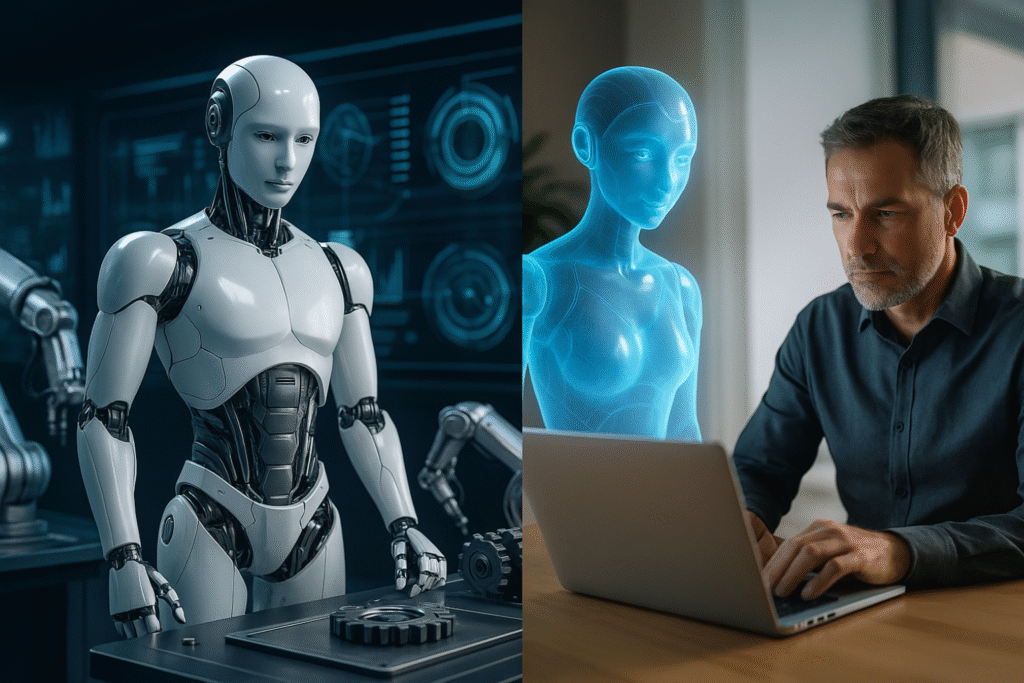
It's common to confuse AI agents with virtual assistants. While assistants execute commands on demand, agents possess autonomy, context, and learning capabilities.

In HR, this means that an AI agent can anticipate needs, suggest solutions, and proactively interact with managers and employees.

This evolution brings a new dynamic to the role of HR, which is shifting from operational to strategic, supported by an automated, responsive, and intelligent ecosystem.

Discover how to create and train these agents in N8N Course, ideal for automated integrations with AI.

Tools and platforms that are shaping HR with AI.

The integration between AI and HR is made possible by a number of specialized platforms. Some of the most widely adopted in the market include:

  • IBM Watson Orchestrate: an AI agent designed to automate HR processes, such as hiring, payroll, and benefits management.
  • Eightfold.ai: talent matching system with predictive AI.
  • HireVueAutomated interviews with emotional and body language analysis.
  • Gupy: a Brazilian platform that uses AI for recruitment management and behavioral assessment.

These tools have contributed significantly to improving the candidate experience, reducing bias, and increasing the productivity of HR teams.
Real-world examples of AI applications in HR.

Real-world examples of AI applications in HR.

Companies of all sizes are already reaping the benefits of adopting AI in HR. One example is EY, which, together with IBM, implemented AI agents to automate tasks such as hiring and benefits management, freeing up valuable time for professionals to focus on strategy.

Another example is Unilever, which uses AI to perform initial candidate screening based on digital interviews and gamified tests. This has increased diversity and reduced hiring time by more than 75%. Read the full case study at [link to case study]. Unilever website

Essential considerations when adopting AI in human resources.

Essential considerations when adopting AI in human resources.

Despite the opportunities, the application of AI in HR requires responsibility. Issues such as data privacy, algorithmic transparency, and the elimination of biases need to be rigorously addressed.

Creating ethics committees, validating predictive models, and ensuring the safe use of data is fundamental.

HR must position itself as a key player in this process, ensuring that technology serves the organizational strategy without compromising the humanization of work relationships.

What to expect from the future of AI in HR

In the coming years, we will see the consolidation of autonomous agents with native integration to ERPs such as SAP, Salesforce, and Workday.

These solutions will work in an interconnected way, with an emphasis on regulatory compliance and real-time auditing.

Furthermore, personalization will be the norm. Employees will have virtual assistants who will accompany them throughout their entire journey, from hiring to termination, providing guidance, feedback, and tailored growth opportunities.

How to start applying AI to your company's HR department.

Companies wishing to embark on this journey should begin with a low-risk, high-impact pilot program. Automating resume screening or implementing an employee support chatbot are common and effective approaches.

For professionals who wish to excel in leading this transformation, structured training is recommended.

THE Agent and Automation Manager Training with AI It is an excellent gateway for those seeking to master real-world tools, methodologies, and applications.

Other supplementary courses can also accelerate the learning curve:

With the right knowledge, it's possible to lead a true digital revolution in the human resources sector, generating strategic value, operational efficiency, and a much richer collaborative experience for everyone involved.

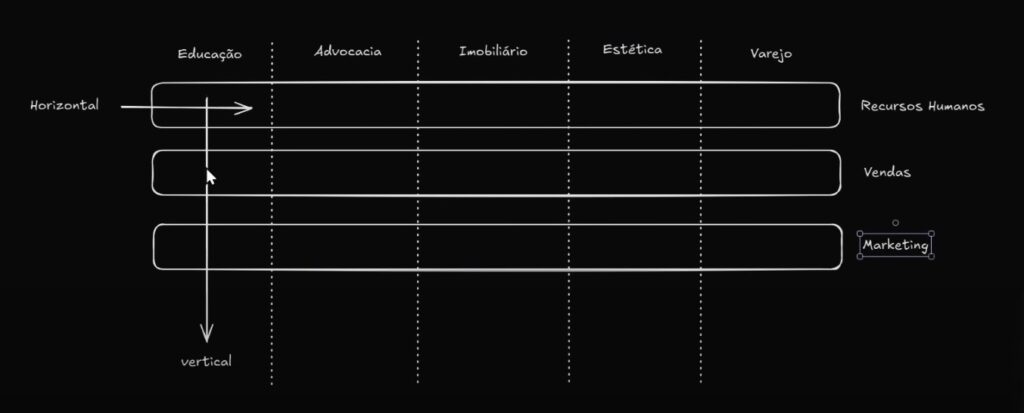
Hey everyone! In today's chat, I want to show you why... AI agents Verticals are one of the biggest opportunities you'll see in the next few years. Maybe in your entire career.

This term gained traction after an episode of Y Combinator. Yes, the same accelerator that launched names like Airbnb. And guess what: Sean Altman himself, if he were starting a business today, would bet on this model. So pay attention.

Vertical AI and horizontal AI: what's the real difference?

Imagine this: Horizontal AI is like a Swiss Army knife. It's useful for everything, but it's not sharp in anything specific. Vertical AI, on the other hand, is a surgical tool. It was designed to solve a precise pain point in a precise niche.

For example: you have generic CRMs that work in various companies. Now, imagine a CRM made specifically for digital schools. That's the essence of vertical AI. Total depth in a specific market.

And just to clarify, when I talk about AI, I'm referring to Artificial Intelligence.

What are vertical AI agents and what are they used for?

The era of hyper-personalization has only just begun.

We already live in a time when everyone wants a personalized experience. Now, with artificial intelligence, this has become exponential.

What once required an entire team to serve each customer uniquely can now be resolved by an AI agent. Case by case. Effortlessly. At scale.

And this doesn't just apply to B2C. In B2B, companies also want tailor-made solutions. And they are willing to pay more for them.

Why AI agents will overtake the SaaS market.

The impact of hyper-personalization with AI.

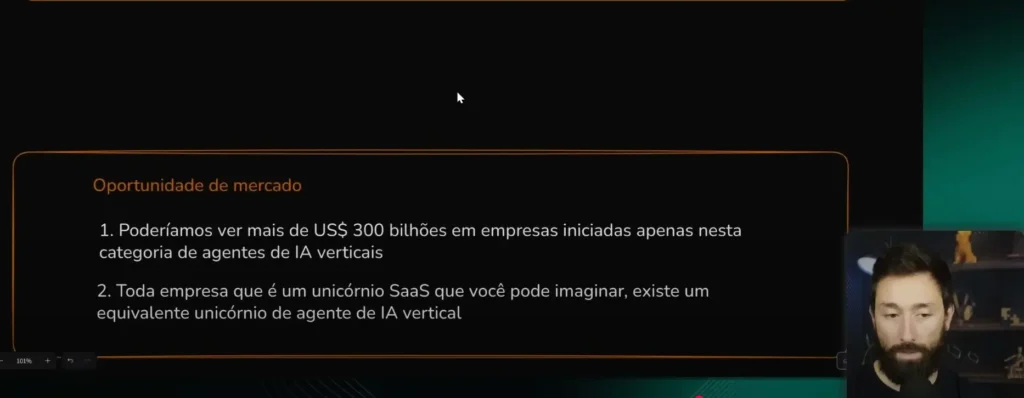
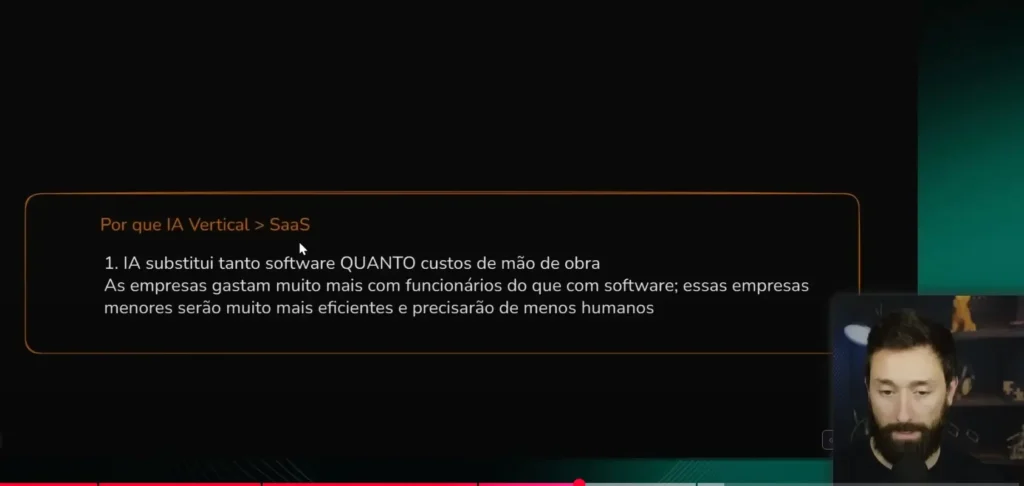
O Satya Nadella, CEO of Microsoft, [Name], has already spoken about this. AI agents will not only replace softwares. They will also replace part of the workforce.

And that changes everything. Because today, companies spend much more on people than on technology.

SaaS, for those unfamiliar, stands for Software as a Service, meaning softwares distributed via subscription. And the prediction is that vertically integrated AI agents will surpass this model in scale and efficiency.

That's why Y Combinator believes this market could be up to ten times larger than SaaS.

Real-world examples that are already in operation.

We're already seeing some models gaining traction abroad.

MT (a NextAge initiative) automates QA (Quality Assurance) testing.. Cap AI created a chatbot exclusively for developers. And Silent uses AI to handle voice-based collections for auto loans.

In Brazil, there are people flying too.

O VET-GPT It is a scientifically trained agent specifically for veterinarians. YOU KNEW It provides environmental consulting services based on specific laws and regulations. And the Chat ADV It has already surpassed 90,000 lawyers, offering the creation of legal documents and integrated research.

All these examples have one thing in common: they are specific, solve a real pain point, and scale with AI.

And what does this mean for you as an entrepreneur?

Why AI agents could outperform the SaaS market

If you're building something now, the question is simple: What task in your market is still done manually, repetitively, and without personalization?

This is where an artificial intelligence agent can step in and generate significant value.

It's not about creating the next tech giant. It's about creating a highly niche player that solves a real problem. It's about finding an inefficiency and turning that into a competitive advantage.

Last message: pay attention to this

On August 5th, at 7 PM, the NoCode Startup We're going to release a historic offer. Lifetime access to the platform. Yes, lifetime access. An opportunity that people have been asking for for years.

Then Access the anniversary page, register, and stay tuned for what's coming next.

If you enjoyed this content, share it with someone who needs to open their eyes to this. new era of AI. Let's go together.

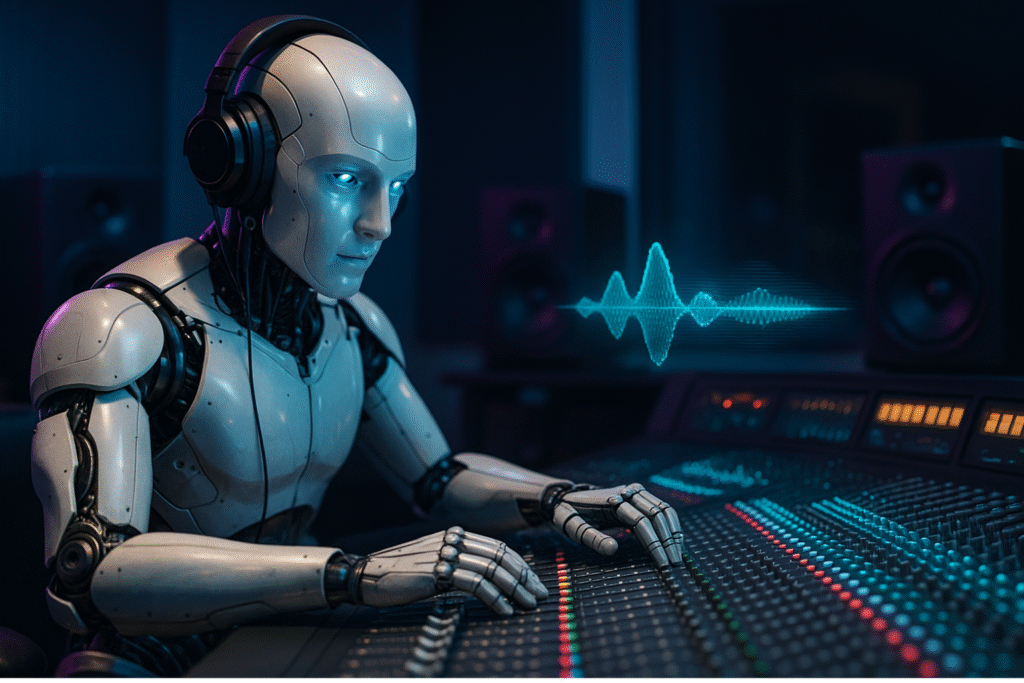
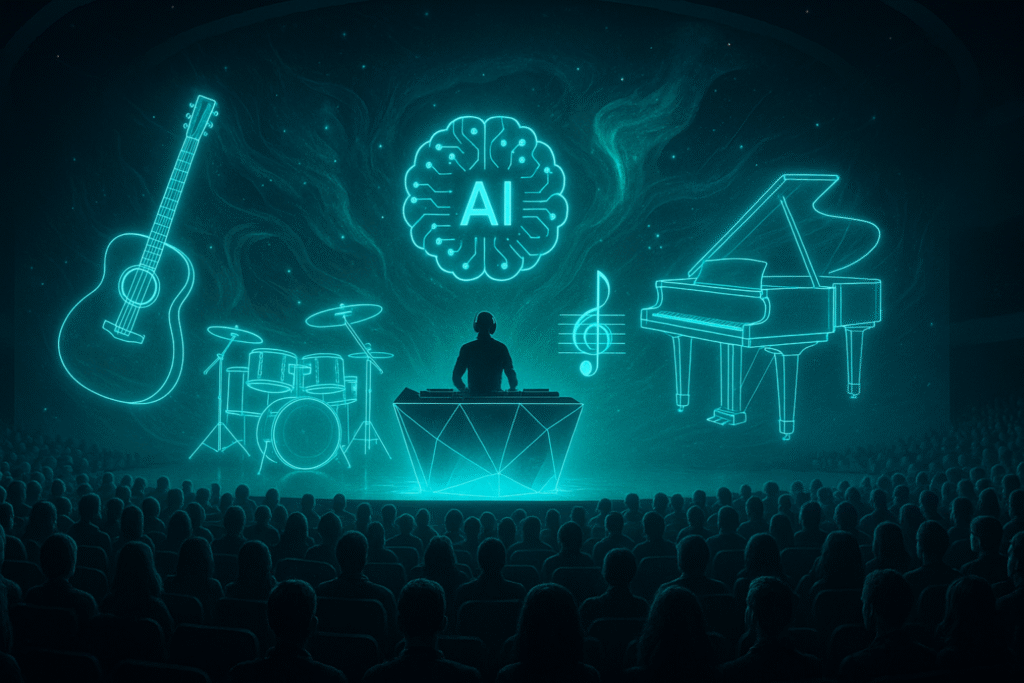
Artificial intelligence has impacted various creative sectors, and one of the most revolutionary is undoubtedly music production. AI to create music It's no longer a futuristic promise: it's an accessible reality that is reshaping the way artists, producers, and enthusiasts create sounds, compositions, and soundtracks in an intelligent and automated way.

What is AI for Creating Music?

What is AI for Creating Music?

AI for creating music is a set of computational techniques, generally based on... machine learning and deep neural networks, which allows automated systems to compose, harmonize, produce, and edit music with minimal or no human intervention.

These intelligences learn musical patterns from large databases and can generate anything from simple melodies to complex compositions with professional instrumentation and arrangements.

This type of AI became popular with the growth of intuitive tools that democratized access to technology, whether for professional use in studios or as a creative resource for influencers and game developers and apps.

How Does AI-Based Music Composition Work?

AI systems for music creation operate through predictive modeling. They analyze millions of musical examples and, based on this knowledge, make predictions about which notes, chords, or rhythmic structures are most likely in given contexts. In this way, they are able to:

  • To generate original melodies with harmonic coherence;
  • Imitating specific musical styles;
  • Create soundtracks for videos, games, or podcasts;
  • To harmonize vocals or beats automatically.

More advanced tools allow for real-time interaction with the user, suggesting melodic variations, key changes, or adaptations based on immediate feedback.

Top 10 AI Tools for Creating Music in 2025

Below, we list the most popular and effective platforms that use AI for music composition, production, and mastering.

1. AIVA (Artificial Intelligence Virtual Artist)

AIVA (Artificial Intelligence Virtual Artist)

Specializing in symphonic compositions and film scores, the AIVA It is widely used in audiovisual productions and games. It allows for highly precise editing of musical scores and styles.

2. Soundraw

Soundraw
Soundraw

Ideal for content creators, the Soundraw It allows you to generate original AI-powered tracks in just a few clicks. It's highly customizable and intuitive, even for those without advanced musical knowledge.

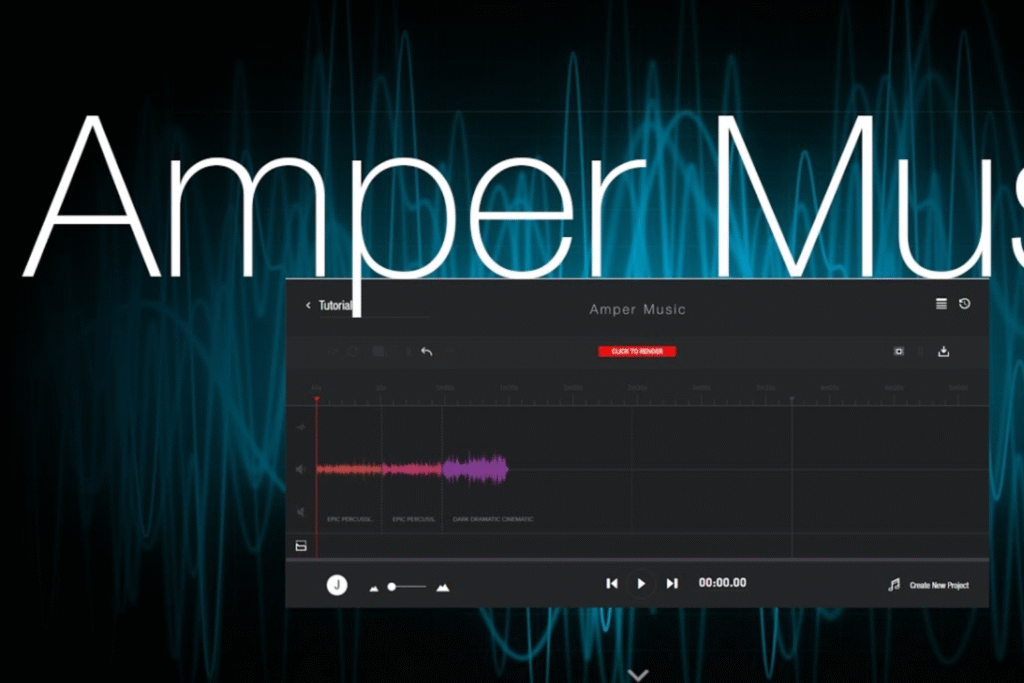
3. Amper Music

Amper Music
Amper Music

Widely used by agencies and video producers, the Ampere It creates soundtracks based on desired genres and emotions. With a user-friendly interface, it offers easy commercial licenses for use on social media and advertising.

4. Boomy

Boomy
Boomy

The proposal of Boomy It allows anyone, even without technical knowledge, to create music and publish it on platforms like Spotify. AI takes care of the entire creative process.

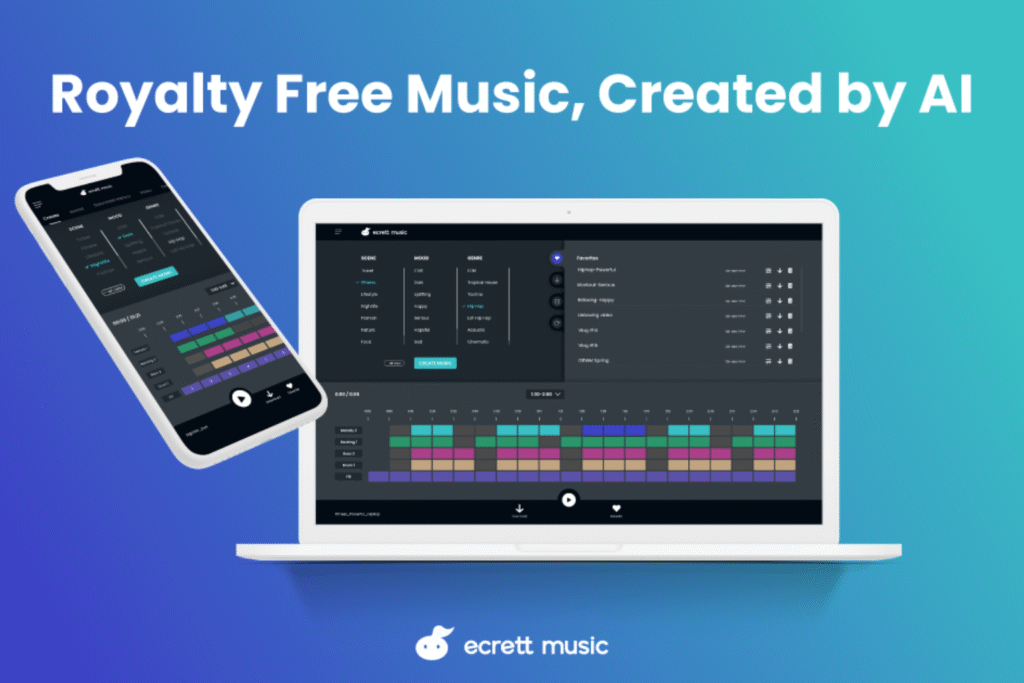
5. Ecrett Music

Ecrett Music
Ecrett Music

Designed for use in videos and commercial projects, the Ecrett Music It uses AI to generate soundtracks that fit specific contexts, such as "vlog," "suspense game," or "corporate.".

6. MuseNet (OpenAI)

MuseNet (OpenAI)
MuseNet (OpenAI)

O MuseNet, The OpenAI system is one of the most advanced. Capable of generating compositions with 10 instruments and more than 15 musical styles, it combines deep learning techniques with recurrent neural networks.

7. Soundful

Soundful
Soundful

With a focus on video creators and streamers, the Soundful It produces royalty-free tracks adaptable to styles such as Lo-Fi, EDM, Hip Hop and others.

8. Loudly

Loudly
Loudly

More than just a music generator, the Loudly It's a collaborative platform. It offers a sample library and an AI-powered music editor, ideal for DJs and producers.

9. Soundtrap by Spotify

Soundtrap by Spotify

Although it is not automated by AI, the 100% Soundtrap It uses artificial intelligence to suggest mixing adjustments, automate instruments, and collaborate in real time.

10. Mubert

Mubert
Mubert

Based on generative algorithms, the Mubert Creates "infinite" music for environments, apps, games, or live streams. Offers an API for developers who want to integrate automatic soundtracks into their products.

Practical Applications and Real-World Use Cases

Practical Applications and Real-World Use Cases

Advertising companies have been using AI to create jingles in record time, significantly reducing production time without compromising originality.

AI in Applications and Digital Products

apps developers embed musical AI to adjust soundtracks in real time based on user behavior.

For example, apps meditation or fitness apps already use AI to adapt the rhythm and style of the music to the type of activity being performed. This sound personalization increases user engagement and retention on the platform.

Independent creators have also benefited: by integrating music AI into their production workflows, they are able to release exclusive content more frequently, strengthening their presence on networks like TikTok and YouTube.

For those who want to apply musical AI to digital products, such as apps or interactive web interfaces, an efficient way is to master visual, code-free tools.

THE AI Agent and Automation Manager Training The No Code Startup teaches how to quickly integrate artificial intelligence into workflows and interfaces without relying on programmers.

Advantages of Using AI for Music Production

The biggest advantage is creative agility. With AI, it's possible to test rhythmic variations, melodies, harmonies, and arrangements in minutes. This reduces production costs, encourages experimentation, and breaks down technical barriers.

Another advantage is the democratization of creation: anyone with an internet connection can generate professional-quality music.

Future Trends and Innovations in Music with AI

Future Trends and Innovations in Music with AI

Trends point towards greater sound personalization, where AIs will be able to create soundtracks adapted to emotions or environmental context in real time.

The use of generative models like Diffusion and Transformers Creating hyperrealistic synthetic sounds is another promising path.

Studies such as those published by MIT Technology Review  They point to the convergence between AI, neuroscience, and automated composition as a technological frontier for the next decade.

How to Expand Your Creative Potential with Musical AI

Musical AI opens doors to new forms of expression and creative innovation. Whether exploring automated compositions or integrating intelligent sounds into apps and digital products, now is the ideal time to deepen your knowledge.

For those seeking to apply these technologies in practice, with technical freedom and speed of execution, the AI Training NoCode It's the right way to transform musical ideas into real solutions, even without knowing how to program.

Launched in November 2024 by Anthropic, the Machine Communication Protocol (MCP) has transformed the way... AI agents They interact with online services. 

Instead of programming each API call, you describe functions In a JSON manifest, the agent executes everything automatically. 

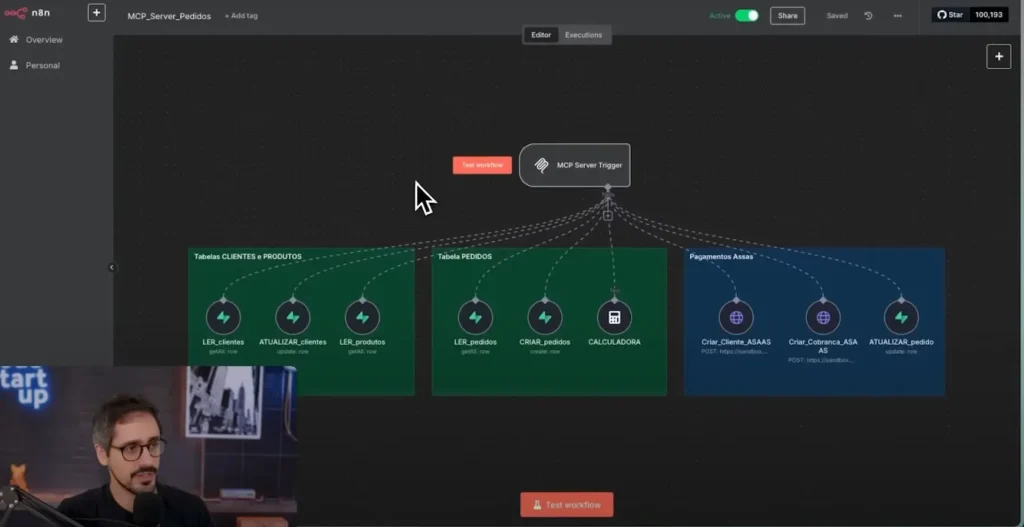
N8N incorporated native support for MCP, allowing you to publish or consume servers without writing code. 

In this tutorial, you will understand why MCP is considered revolutionary, when it's worth adopting, and how to test it in a real-world workflow.

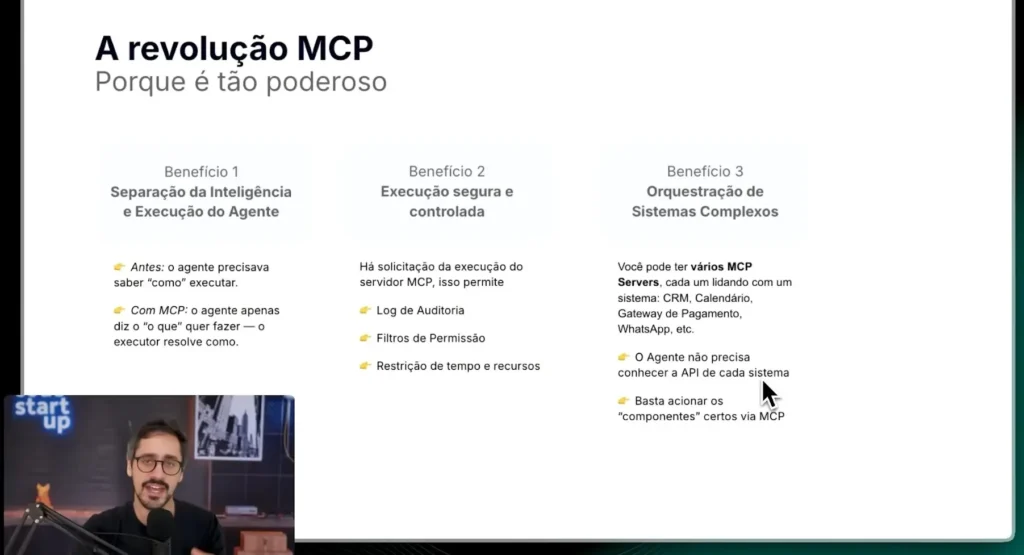
1. Why is MCP revolutionary?

MCP directly connects AI agents to services, eliminating manual programming steps and enabling conversations to create customers, issue invoices, or read spreadsheets in real time.

The adoption by companies like Stripe indicates that this communication model is likely to become the standard in the coming years.

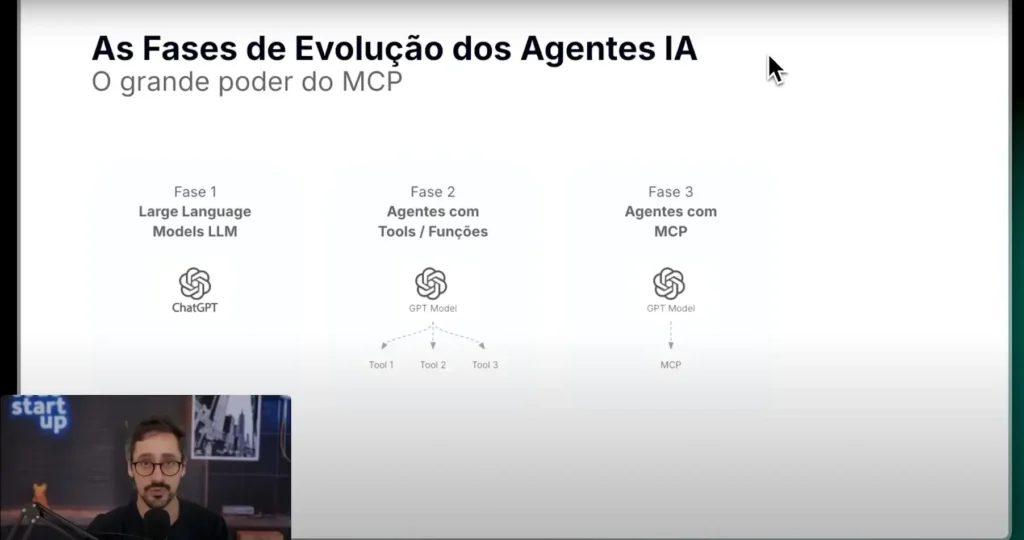
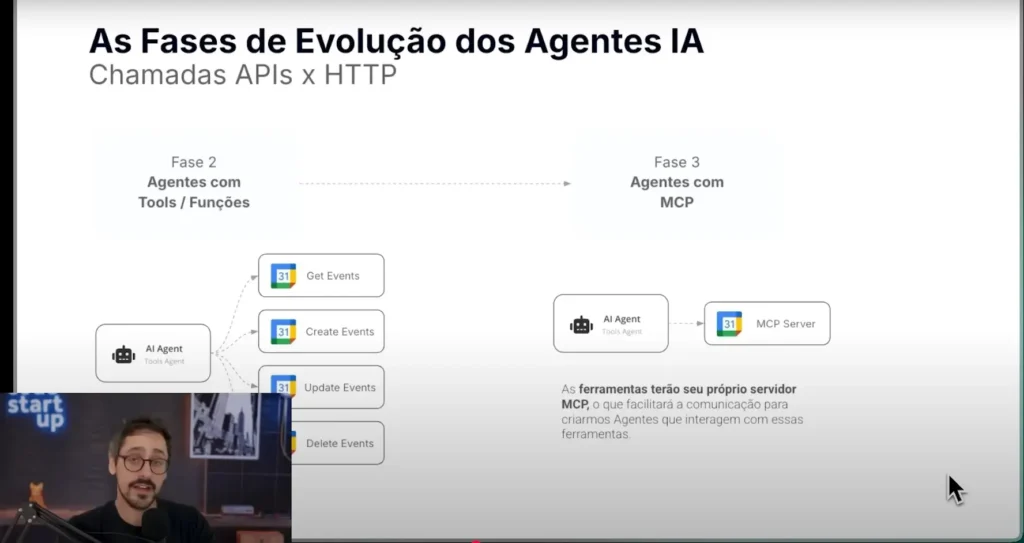
2. The three phases of evolution of AI agents

What is the MCP standard?
  1. Accessing APIs via code: The developer writes all the HTTP requests.
  2. Built-in tools: Platforms expose internal functions ready for the model.
  3. Open Protocols (MCP): Any documented service becomes plug-and-play, allowing for near-instantaneous scalability of capabilities.

3. What is MCP and how does it work?

The MCP is essentially a specification that describes functions, required parameters, and usage examples in a JSON file.

When the agent reads this manifest, it knows exactly which call to make and how to handle the response, without any additional instructions in the prompt.

In other words, the manifest replaces the need for custom code: simply update the file and new functions become available, while the error and authentication logic remains centralized.

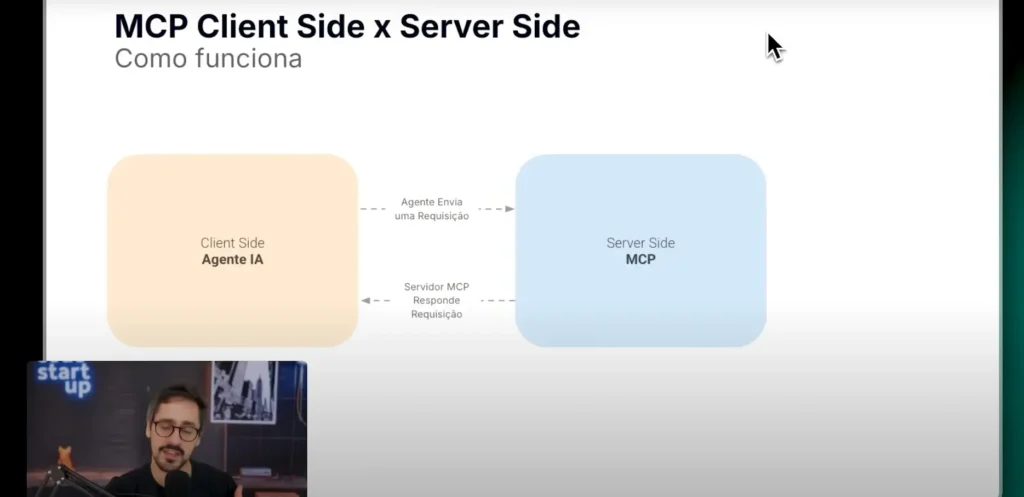
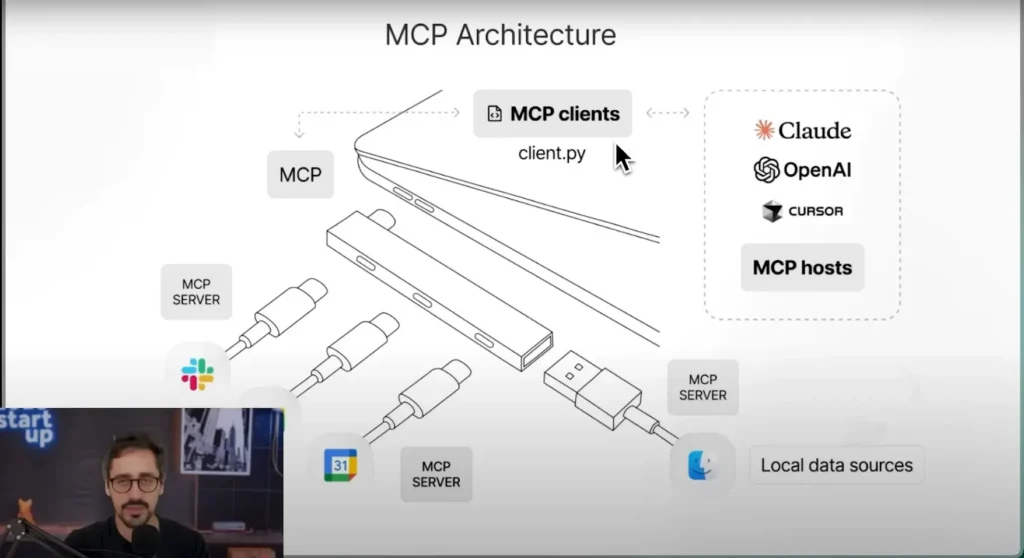
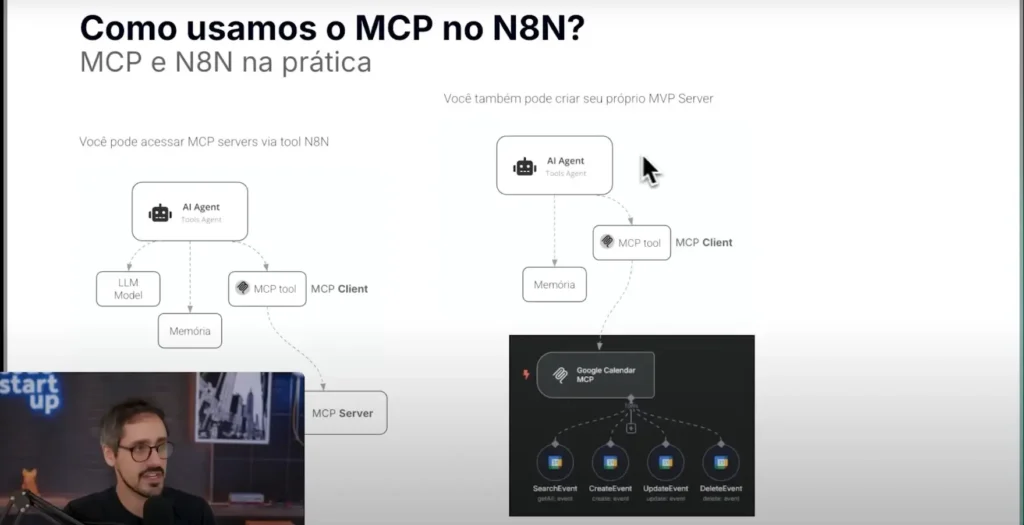
4. Difference between MCP Client and MCP Server

Difference between MCP Client and MCP Server
PaperWhat it doesWhen to use
ClientConsumes manifestos published by third parties.You want to quickly access features from external services (e.g., create payments in Stripe).
ServerPublish your own manifesto.It needs to expose internal processes — from CRM to ERP — as functions that any agent can access.
What is MCP used for?

5. Benefits of using MCP in AI projects

benefits of using the MCP standard

Adopting MCP reduces code maintenance, standardizes inputs and outputs, facilitates governance (you define only the allowed actions), and accelerates prototyping.

Adding or removing features becomes a simple edit to the manifest, without impacting existing prompts or flows.

6. Comparison: Traditional API vs. MCP

Traditional API vs. MCP
AspectConventional REST APIMCP
Target audienceHuman developersAI Agents
DocumentationSwagger/OpenAPIFunction-oriented manifesto
Intention → actionManual conversion (code)Automatic by model
UpdatesThey depend on developers.All that's needed are adjustments to the manifesto.

7. Tools with MCP support

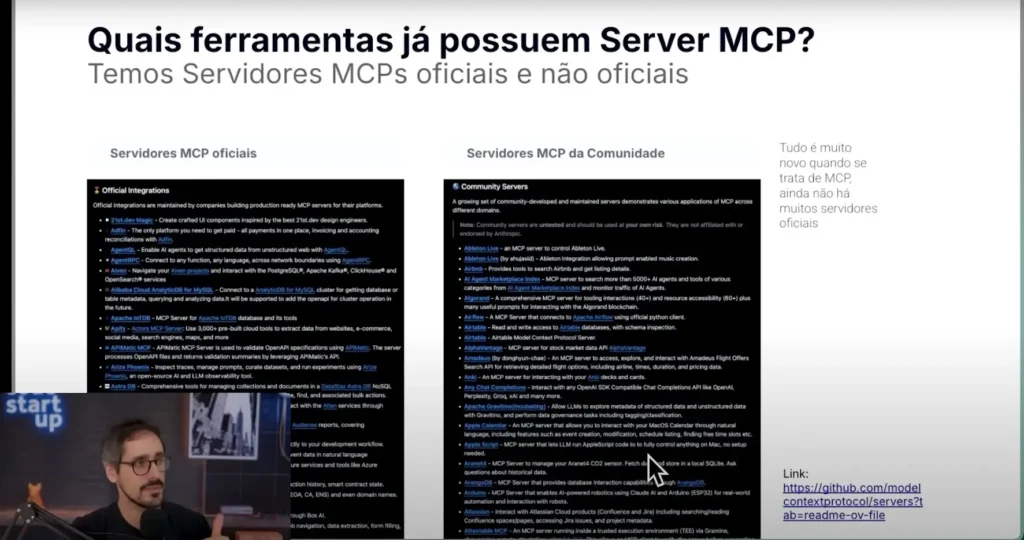
mcp servers on github

Major players already offer official support. Stripe publishes its manifesto for billing operations; Anthropic has enabled direct use in... Claude; the GitHub Test the protocol in code-assist extensions.

In addition, the community maintains connectors for Google Sheets, Notion, and HubSpot. To monitor all of this, projects like LangSmith provide a complete overview of MCP flows, allowing you to debug each call in detail.

8. How does N8N integrate with MCP?

N8N integration MCP

In mode Client, just point the N8N to an external manifest and create an already configured HTTP node. In mode Server, You select any node (or even an entire workflow), define its name, description, and arguments, and N8N automatically generates the JSON manifest.

This file can be hosted locally (low response time) or published on the web for consumption by other agents or tools.

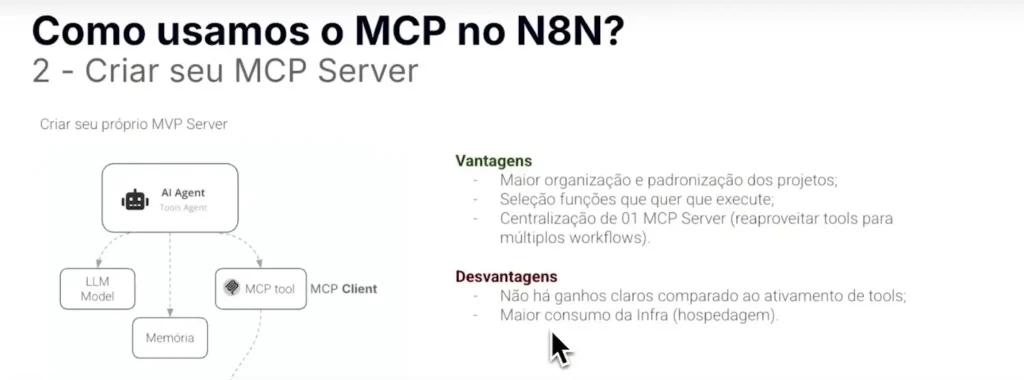
9. Advantages and disadvantages of creating your own MCP Server

Advantages and disadvantages of creating your own MCP Server.

Building your own server puts you in control of versioning, security, and usage limits. The downside is overhead: each call goes through your infrastructure, requiring monitoring, scaling, and caching policies to avoid latency or unnecessary costs.

If the function officially exists in another service, it might be simpler to consume the manifest already maintained by the provider.

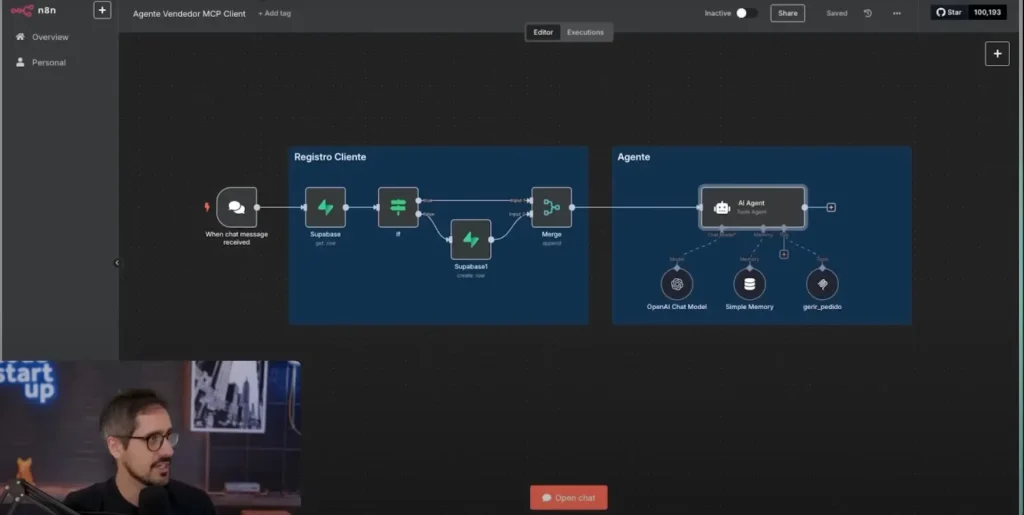
10. Practical example: sales agent using MCP Server

n8n automated sales agent with mcp
  1. In N8N, create three functions: createLead, Generate Proposal and sendInvoice.
  2. Publish them as MCP Server.
  3. Connect an agent (Claude or GPT-4o) via MCP Client.
  4. During the conversation, the agent collects customer data, calls createLead, The process generates the proposal and returns a payment link created by enviarInvoice to the user. The entire flow happens in seconds, without a single line of additional code.
MCP Server Automatic Sales Agent

Final considerations

MCP already produces real gains in agility and maintainability, but it's not mandatory in all scenarios. Before adopting it, assess whether the technology solves a concrete problem, test it in small processes, and only then expand its use.

If you need a starting point, host a local manifest on N8N, connect your preferred agent, and observe how the automation behaves.

Keep studying:

mathues castelo profile

Matheus Castelo

grandson camarano profile

Neto Camarano

Two entrepreneurs who believe technology can change the world

Also visit our Youtube channel

en_USEN
menu arrow

Nocodeflix

menu arrow

Community