Artificial intelligence has impacted various creative sectors, and one of the most revolutionary is undoubtedly music production. AI to create music It's no longer a futuristic promise: it's an accessible reality that is reshaping the way artists, producers, and enthusiasts create sounds, compositions, and soundtracks in an intelligent and automated way.
What is AI for Creating Music?
AI for creating music is a set of computational techniques, generally based on... machine learning and deep neural networks, which allows automated systems to compose, harmonize, produce, and edit music with minimal or no human intervention.
These intelligences learn musical patterns from large databases and can generate anything from simple melodies to complex compositions with professional instrumentation and arrangements.
This type of AI became popular with the growth of intuitive tools that democratized access to technology, whether for professional use in studios or as a creative resource for influencers and game developers and apps.
How Does AI-Based Music Composition Work?
AI systems for music creation operate through predictive modeling. They analyze millions of musical examples and, based on this knowledge, make predictions about which notes, chords, or rhythmic structures are most likely in given contexts. In this way, they are able to:
- To generate original melodies with harmonic coherence;
- Imitating specific musical styles;
- Create soundtracks for videos, games, or podcasts;
- To harmonize vocals or beats automatically.
More advanced tools allow for real-time interaction with the user, suggesting melodic variations, key changes, or adaptations based on immediate feedback.
Top 10 AI Tools for Creating Music in 2025
Below, we list the most popular and effective platforms that use AI for music composition, production, and mastering.
1. AIVA (Artificial Intelligence Virtual Artist)
Specializing in symphonic compositions and film scores, the AIVA It is widely used in audiovisual productions and games. It allows for highly precise editing of musical scores and styles.
2. Soundraw

Ideal for content creators, the Soundraw It allows you to generate original AI-powered tracks in just a few clicks. It's highly customizable and intuitive, even for those without advanced musical knowledge.
3. Amper Music
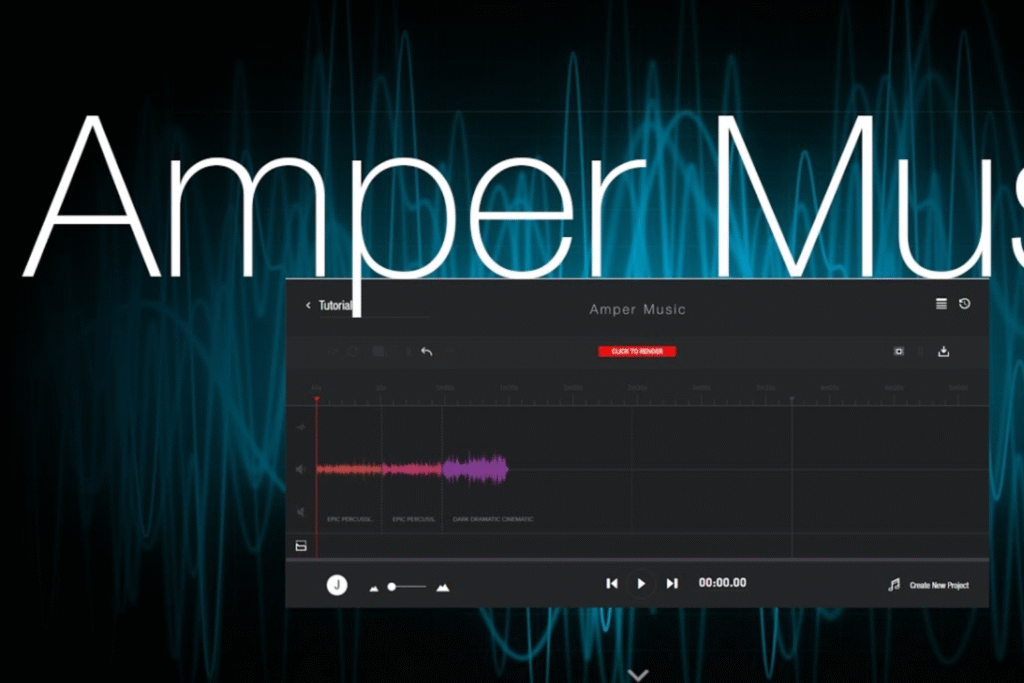
Widely used by agencies and video producers, the Ampere It creates soundtracks based on desired genres and emotions. With a user-friendly interface, it offers easy commercial licenses for use on social media and advertising.
4. Boomy

The proposal of Boomy It allows anyone, even without technical knowledge, to create music and publish it on platforms like Spotify. AI takes care of the entire creative process.
5. Ecrett Music
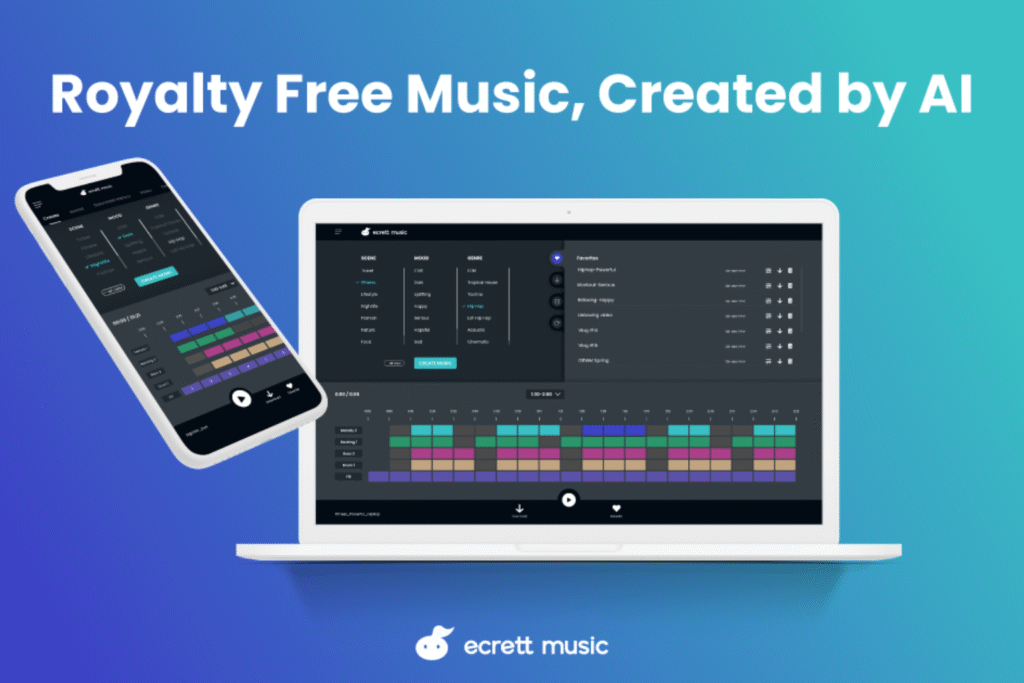
Designed for use in videos and commercial projects, the Ecrett Music It uses AI to generate soundtracks that fit specific contexts, such as "vlog," "suspense game," or "corporate.".
6. MuseNet (OpenAI)
O MuseNet, The OpenAI system is one of the most advanced. Capable of generating compositions with 10 instruments and more than 15 musical styles, it combines deep learning techniques with recurrent neural networks.
7. Soundful
With a focus on video creators and streamers, the Soundful It produces royalty-free tracks adaptable to styles such as Lo-Fi, EDM, Hip Hop and others.
8. Loudly
More than just a music generator, the Loudly It's a collaborative platform. It offers a sample library and an AI-powered music editor, ideal for DJs and producers.
9. Soundtrap by Spotify
Although it is not automated by AI, the 100% Soundtrap It uses artificial intelligence to suggest mixing adjustments, automate instruments, and collaborate in real time.
10. Mubert
Based on generative algorithms, the Mubert Creates "infinite" music for environments, apps, games, or live streams. Offers an API for developers who want to integrate automatic soundtracks into their products.
Practical Applications and Real-World Use Cases
Advertising companies have been using AI to create jingles in record time, significantly reducing production time without compromising originality.
AI in Applications and Digital Products
apps developers embed musical AI to adjust soundtracks in real time based on user behavior.
For example, apps meditation or fitness apps already use AI to adapt the rhythm and style of the music to the type of activity being performed. This sound personalization increases user engagement and retention on the platform.
Independent creators have also benefited: by integrating music AI into their production workflows, they are able to release exclusive content more frequently, strengthening their presence on networks like TikTok and YouTube.
For those who want to apply musical AI to digital products, such as apps or interactive web interfaces, an efficient way is to master visual, code-free tools.
THE AI Agent and Automation Manager Training The No Code Startup teaches how to quickly integrate artificial intelligence into workflows and interfaces without relying on programmers.
Advantages of Using AI for Music Production
The biggest advantage is creative agility. With AI, it's possible to test rhythmic variations, melodies, harmonies, and arrangements in minutes. This reduces production costs, encourages experimentation, and breaks down technical barriers.
Another advantage is the democratization of creation: anyone with an internet connection can generate professional-quality music.
Future Trends and Innovations in Music with AI
Trends point towards greater sound personalization, where AIs will be able to create soundtracks adapted to emotions or environmental context in real time.
The use of generative models like Diffusion and Transformers Creating hyperrealistic synthetic sounds is another promising path.
Studies such as those published by MIT Technology Review They point to the convergence between AI, neuroscience, and automated composition as a technological frontier for the next decade.
How to Expand Your Creative Potential with Musical AI
Musical AI opens doors to new forms of expression and creative innovation. Whether exploring automated compositions or integrating intelligent sounds into apps and digital products, now is the ideal time to deepen your knowledge.
For those seeking to apply these technologies in practice, with technical freedom and speed of execution, the AI Training NoCode It's the right way to transform musical ideas into real solutions, even without knowing how to program.













 EN
EN  PT
PT  ES
ES