Think of a AI agent Like an autonomous assistant. He understands messages, decides what to do, and executes actions. Examples: answering questions, summarizing emails, and scheduling meetings.
This agent connects to tools. APIs, databases, Google Calendar, and WhatsApp are common. This allows it to act in the real world with confidence and context.
Limitations arise when we ask too much of them. A single agent can become slow, confused, and expensive. It makes more mistakes when it needs to cover very different tasks.
How they work in practice and where to apply them.
In practice, the agent receives the user's input. It reads the context, chooses an action, and calls the... tool Correct. Deliver the result and record what happened.
The applications are broad and straightforward. Customer service, call triage, conversation summarization, and scheduling. Administrative and operational routines are also included.
Many agents vs. Multi-agents

Having many agents doesn't mean having a system. multi-agent. Several isolated agents don't communicate and create silos. This seems efficient, but it turns into chaos in the operation.
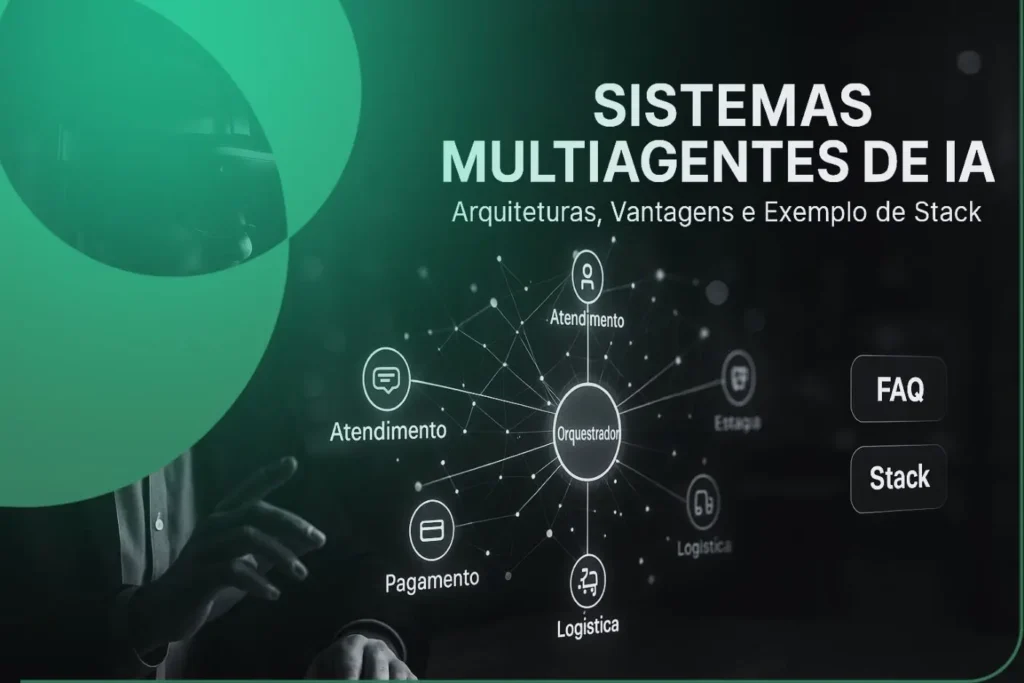
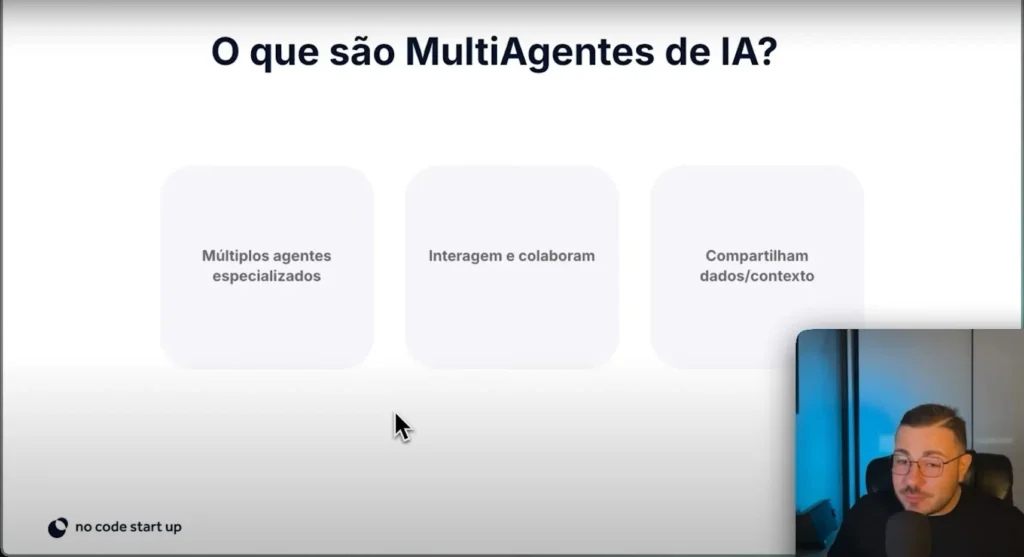
Multi-agent systems are a different story. Specialized agents share data and context. They collaborate to solve complex workflows as a team.
Types of architecture
Orchestrator or Supervisor
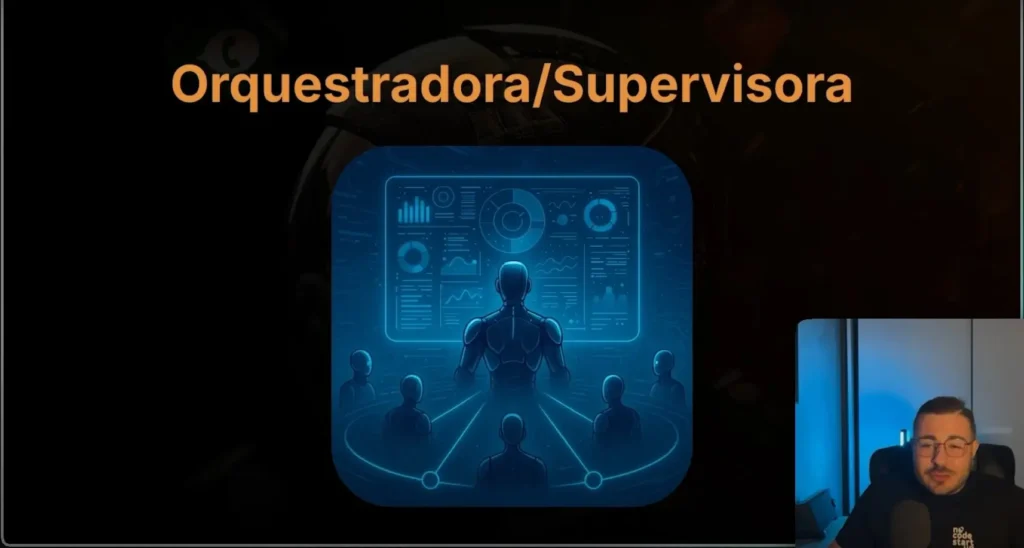
There is a main agent. He sees the whole picture, makes decisions, and delegates tasks. He is simple to control, but he is the single point of failure.
Network of Agents (decentralized)
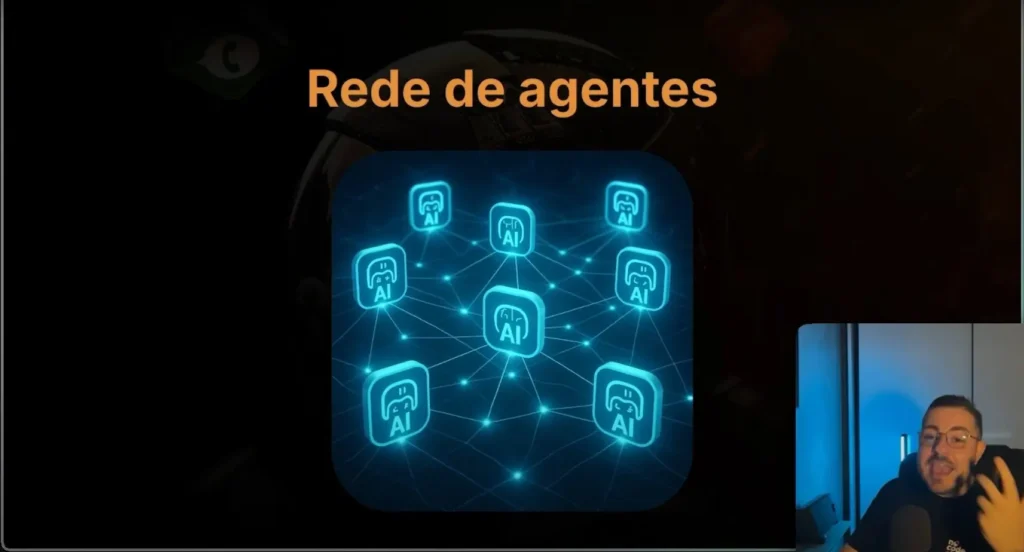
There is no single boss. Agents exchange messages and make decisions together. This provides flexibility, but debugging can be more difficult.
Hierarchical in layers
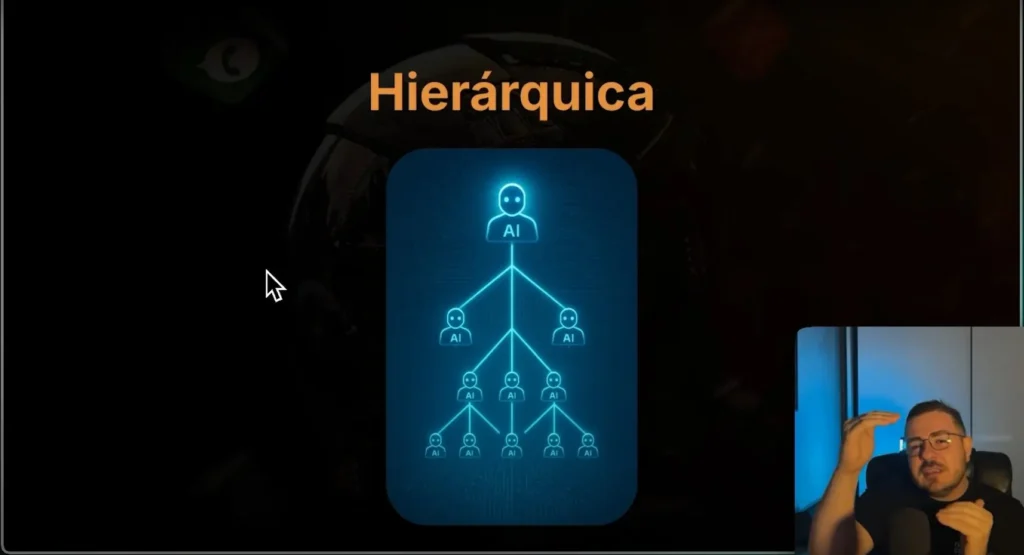
Strategic layers at the top. Operational layers at the base execute actions. Helps to scale and separate responsibilities.
Custom architecture
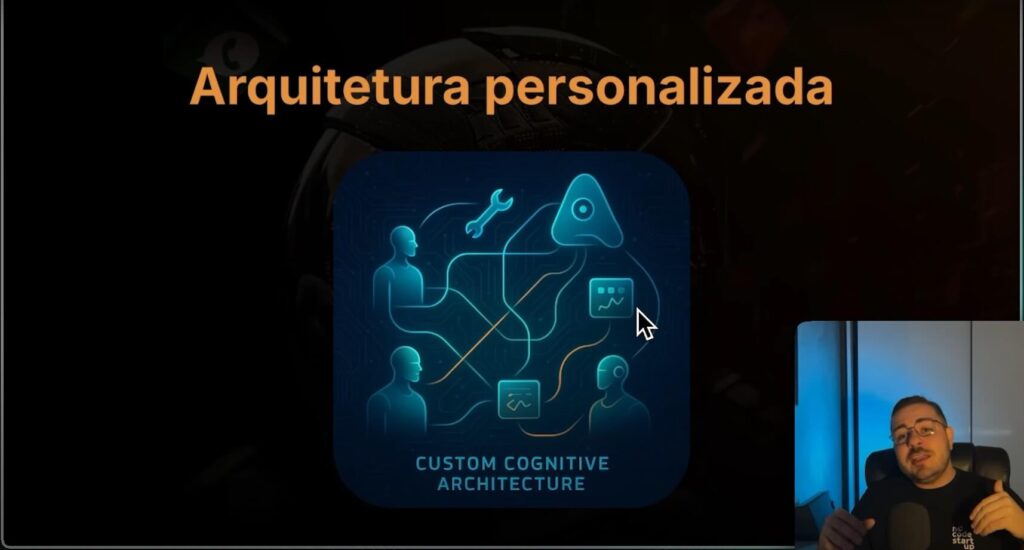
It blends previous elements as needed. It balances control, flexibility, and specialization. It's the most common approach in real-world projects.
Advantages: modularity, specialization, and cost.
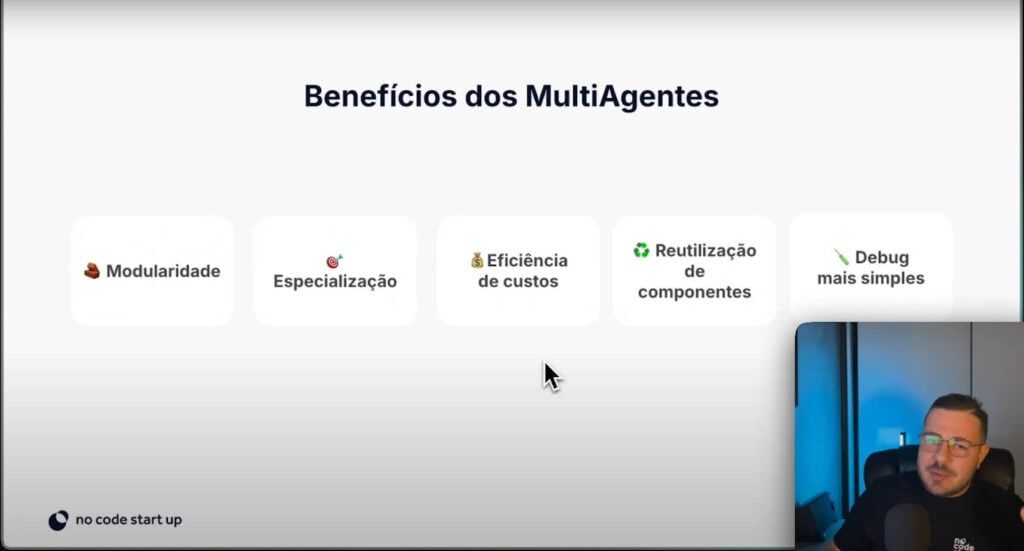
- Modularity: Each agent is an independent unit. You can swap, test, and update parts without breaking the whole. Maintenance becomes predictable and secure.
- Specialization: One agent, one task. Fewer errors, more performance, and higher quality. Smaller models can be used for simple tasks.
- Cost efficiency: You pay for what you need. Lightweight models quickly solve the basic needs. Larger models are only used when they are essential.
- Reuse: Compose agents in new projects. A summary agent can serve multiple systems. This speeds up deliveries and reduces rework.
- Simpler debugging: Isolate the problem by agent. Inspect specific logs and entries. Fix it quickly without bringing everything to a standstill.
When to use (and when to avoid)
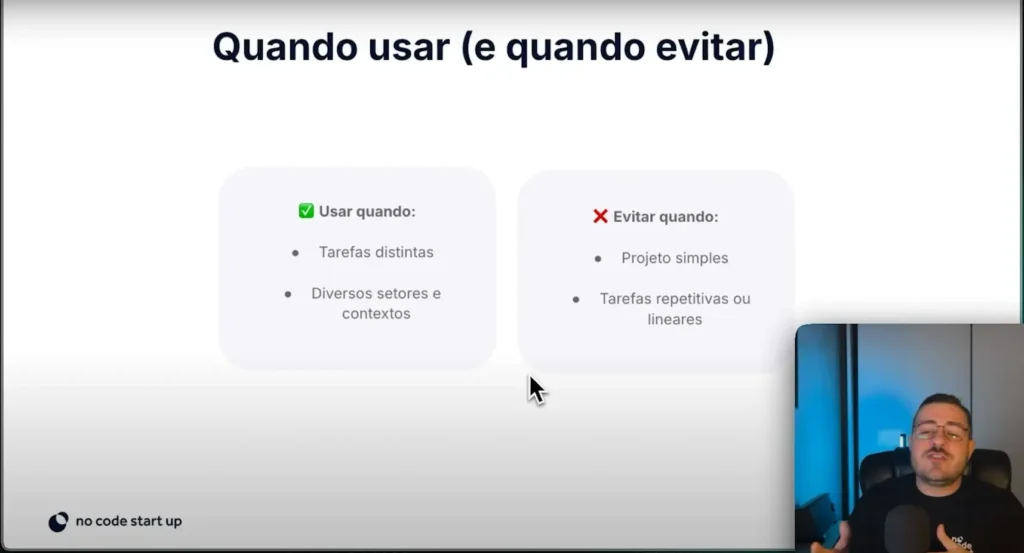
Use multi-agent architecture when there are distinct tasks, different sectors, multiple integrations, and interconnected steps. When the project grows, the architecture shines.
Avoid this if the flow is linear and repetitive. A single, well-configured agent may suffice. Added complexity is costly and adds latency.
Practical example in e-commerce with multiple agents.

Imagine a customer starting a purchase. customer service agent It understands needs and collects data. Then it sends context to the next agent.
O stock agent Check availability. If it's okay, activate the... payment agent. He sends the link and confirms the payment.
Then comes the logistics agent. It generates the tracking code and organizes the delivery. Everyone shares data to maintain a coherent workflow.
ResultAgility and scale. Each agent does what they do best. The entire team functions as a coordinated organism.
Precautions and risks when implementing
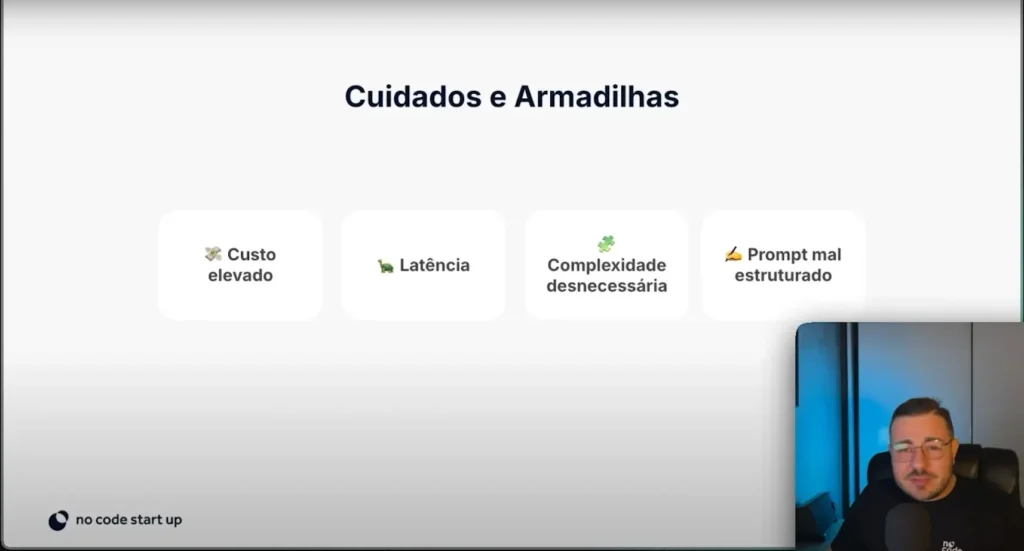
- Cost: More agents generate more API calls. Without planning, the bill grows quickly. Monitor usage and set limits.
- Latency: Conversations between agents add to delays. Design for parallelism and timeouts. Avoid unnecessary dependencies between steps.
- Complexity: Don't complicate the simple. If a single agent solves the problem, don't multiply agents. Prioritize clarity over sophistication.
- Prompts and protocols: Define a clear structure. Who speaks to whom, in what format, and in what context. Poorly written prompts undermine quality..
- Observability: Record inputs, outputs, and decisions. Keep logs by agent and by transaction. This reduces the time needed to correct errors.
Closing
Multi-agent architectures deliver coordination, scale, and control. They are ideal for processes with multiple functions and integrations. Choose the right architecture and move forward with confidence.
Example of a recommended stack
- Models Orchestrator: GPT-5 Thinking. Utilities: GPT-5 mini/nano for simple tasks. Embeddings: text-embedding-3-large; OSS: Llama 3.1/Mistral.
- Orchestration LangGraph or AutoGen for multi-agent coordination. Queues: Redis Streams or RabbitMQ. Scheduler for routines and SLAs.
- Memory and RAC Vector DB: Pinecone, Weaviate, or pgvector. Section indexing and source versioning. Citations with confidence scores.
- Tools and integrations Whatsapp via Twilio or Gupshup. CRM: Notion, Pipedrive or HubSpot. Email, Slack, Google Calendar and Sheets.
- Data and Infrastructure Transactional database: Postgres/Supabase. S3-compatible storage for attachments. Backend: FastAPI (Python) or Node/Express.
- Observability and security Tracing: OpenTelemetry and LangSmith. PII masking, RBAC and vault/Doppler. Cost alerts and agent-based auditing.
- Delivery Front-end web development in Next.js. Webhooks for events and automations. End-to-end testing with Playwright and API contracts.
FAQ: AI Multi-Agents
Single agent or multiple agents?
Use multi-agent when there are distinct steps and integrations. If the flow is linear, a well-configured single agent will suffice.
How many agents should I start with?
Start with 3 to 5 critical roles: Orchestrator, Customer Service, Data, and Tool Execution.
How to avoid hallucinations?
Use RAG with versioned and reliable sources. Apply a trust threshold and neutral fallback. Record the evidence cited by the agent.
How to reduce latency?
Parallelize independent subtasks. Cache context and repeat results. Prefer smaller models for simple tasks.
How do you measure ROI?
Define business metrics before deployment: Average Handling Time (AHT), conversion rate, tickets handled, and cost per objective. Compare baseline versus post-deployment data using A/B analysis.
Security and LGPD?
Minimize the collection of personal data. Encrypt in transit and at rest. Implement RBAC, logs, and controlled retention.
What technical metrics should you track?
Average time per shift and correct delegation rate. Errors per tool, cost per conversation, and success rate. Include user satisfaction and NPS.
Can I use open source templates?
Yes, for local tasks or lower cost. Evaluate quality, VRAM, and latency. Combine with proprietary models when necessary.
















 EN
EN  PT
PT  ES
ES