
I tested three data extraction tools with AI. One of them is completely free and has surprised me with its results. In this article, I'll tell you what it measures, what worked for it, and who each one is suitable for.
If you work with automation, marketing, or data analytics, you know this: without clean, reliable data, no system delivers value. Let's get down to business, using practical and direct language.
Why AI-powered data extraction is important.
AI-powered extraction involves collecting information from websites and then transforming it into structured data for analysis or integration. The goal is to improve quality and scale with less manual rework.
Current tools combine capture and pre-processing. They clean HTML, preserve titles and lists, and remove noise. This makes it simpler to feed content. RAG, dashboards and automations.
Methods: Web Scraping vs Web Crawling
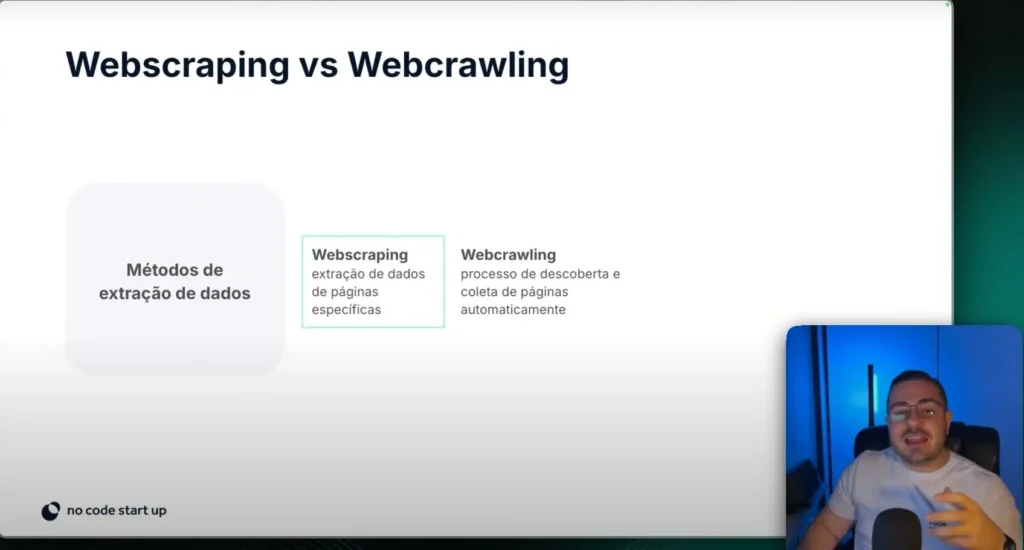
Web Scraping It extracts data from specific pages. You already know the URL and define what you want to scrape. It's great when the source is stable and predictable.
Web Crawling It automatically discovers pages. The tool navigates through links and creates a site map. Then you decide what to extract from each page.
Many solutions combine both: crawling to map and scraping to pick up what's of interest. This provides both coverage and precision.
Evaluation criteria used in the tests
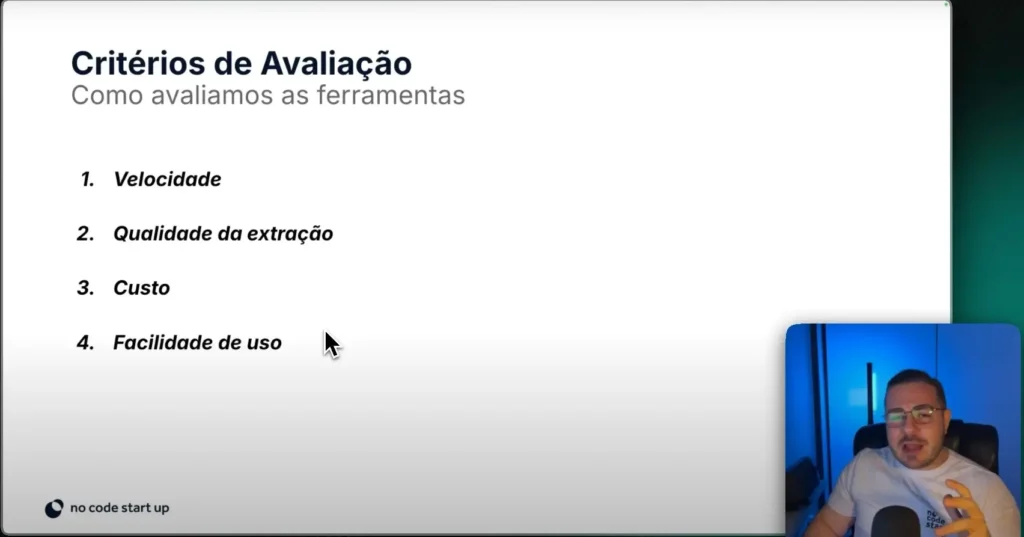
Define four criteria for comparing the tools. Speed, quality of extraction, cost and ease of use. The same page and the same use case for all.
The chosen page was the n8n documentation (home). I sought to preserve titles, lists, and code blocks. I also evaluated export formats and dashboard experience.
First tool: Firecrawl
O Firecrawl It combines crawler and scraper capabilities with AI. It's strong for high-volume handling and delivers content ready for RAGS. It accepts multiple formats and has integrations for... API.
In my test, it preserved the structure well. Titles, lists, and code blocks were clean. The captcha appeared at the end, as expected.
It's simple to use, with scraping, crawling, and search options. It's cost-effective using credits and comes with an initial bonus. A good choice when you want loyalty and customization.
Second tool: Apify
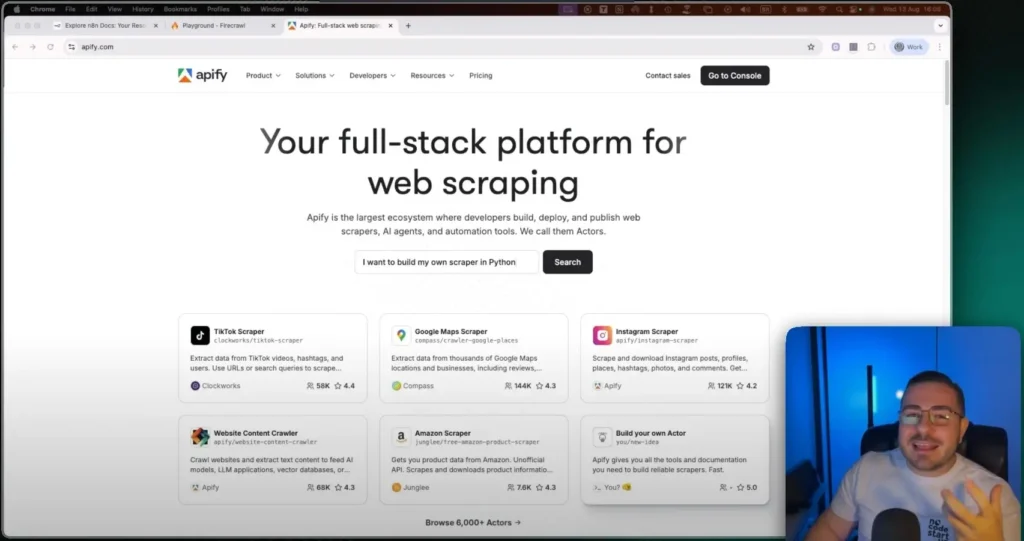
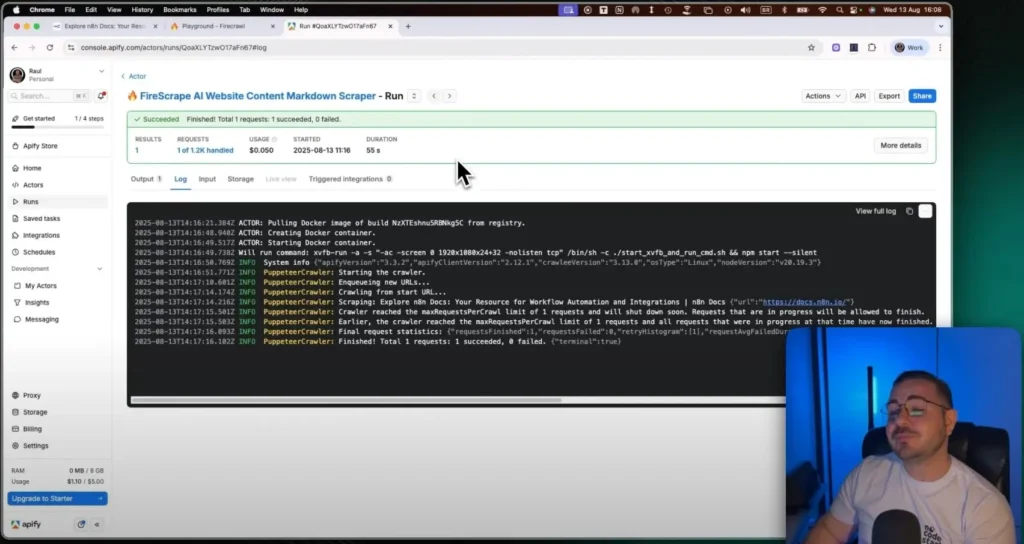
THE Apify It's an automation platform with marketplace. The Actors These are ready-made scripts for specific sources. There are thousands, covering social networks, maps, and much more.
In the test, I chose a website-to-markdown actor. The quality was high and it provided useful metadata. There is a cost, with free initial credits for testing.
The usage curve depends on the right actor. You need to configure parameters to achieve the desired result. In return, you gain flexibility and scalability.
Third tool: Jina Reader
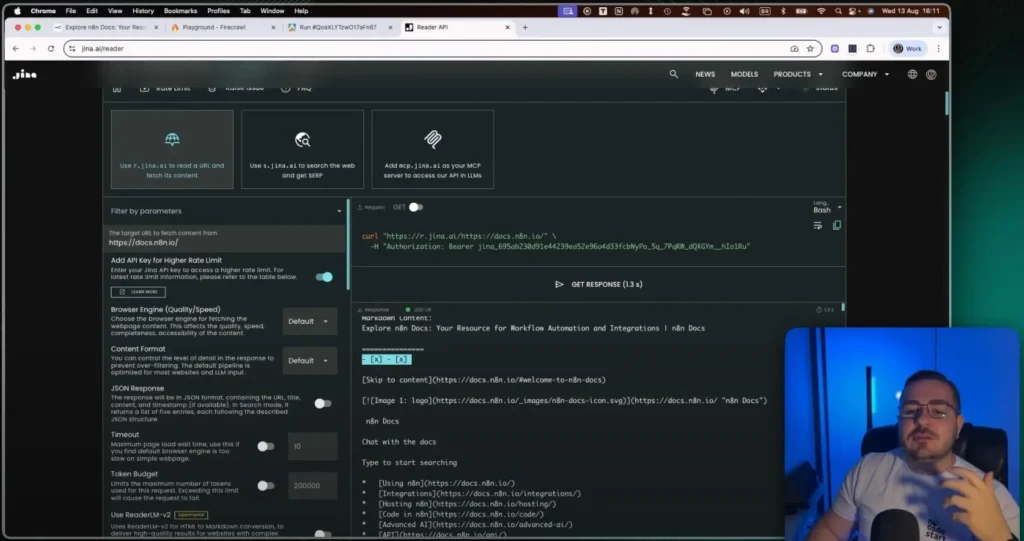
THE Jina Reader It gets straight to the point. It transforms any page into clean, structured text. It is 100% free For basic use.
The usage is simple: prefix the URL with the service. You can also generate a API Key For more processing power. The quality is good, with minor formatting differences.
It works very well for feeding LLMs. Markdown comes light and ready to eat. Ideal when speed and zero cost are a priority.
Comparative results
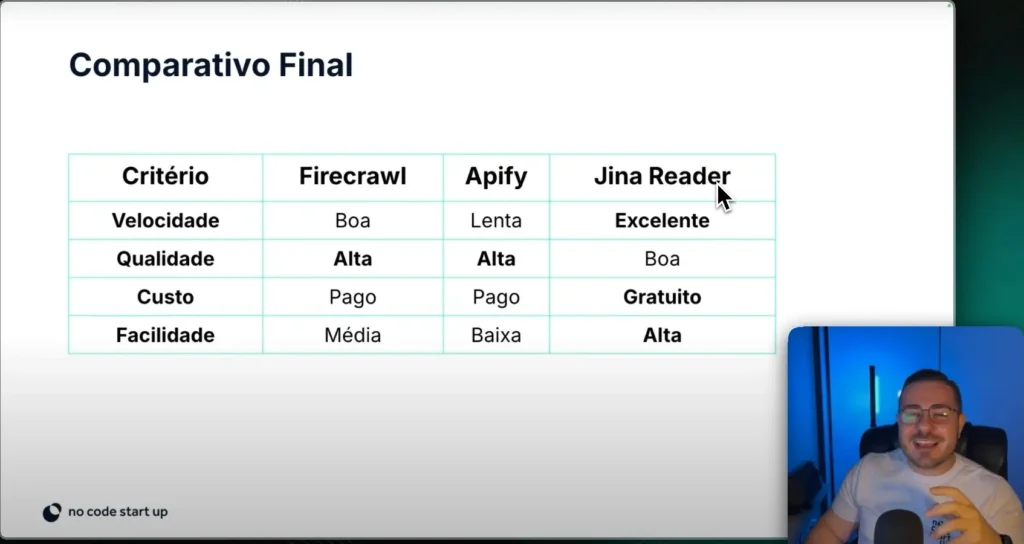
SpeedJina Reader was the fastest in my case. Firecrawl came in second, followed by Apify. In larger scenarios, the order may vary.
QualityFirecrawl and Apify maintained greater visual fidelity. Jina Reader introduced slight differences in some symbols. All delivered the essentials clearly.
CostJina Reader wins because it's free. Firecrawl and Apify use credits/subscriptions with an initial bonus. The final cost depends on volume and complexity.
EaseJina Reader is copy and paste. Firecrawl has medium complexity with a good interface. Apify is powerful, but requires selecting and adjusting the actor.
Quick recommendations Want zero cost and speed? Use Jina Reader. Want maximum fidelity and customization? Use Firecrawl. Do you need extreme flexibility and ready-made scripts? Use Apify.
Closing
These three options cover most scenarios. Choose based on the source, volume, and destination of the data. With the right data, your AI projects will go much further.
If this content helped you, leave a comment. Tell us which tool you would use in your next project. See you in the next video/article.

















 EN
EN  PT
PT  ES
ES