

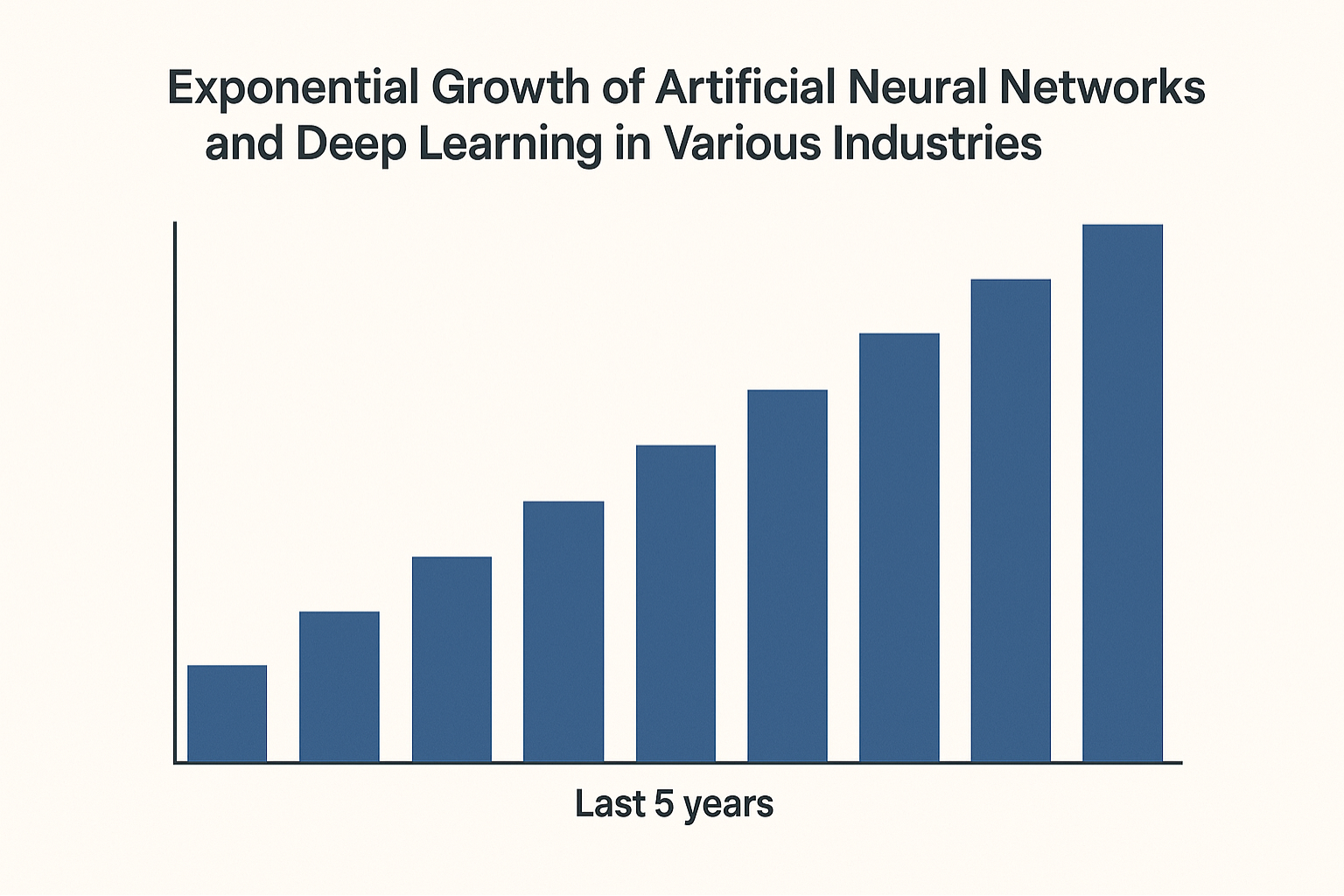
The wave of Artificial Intelligence (AI) has gone from being a futuristic concept to becoming the core infrastructure of any scalable business.
If you are a digital entrepreneur or a developer who uses Low-Code and No-Code platforms, understanding the backbone of this technological revolution — the artificial neural network (RNA) — is not just an advantage, but a competitive necessity.
The complexity that once required PhD data scientists and vast amounts of code is being abstracted away by tools that democratize access to... machine learning models sophisticated.
The challenge, however, remains: how to use this technology strategically and in depth to create products that truly solve complex problems?
This guide is designed to go beyond the superficial. It proposes a technical deep dive, followed by a practical overview and, finally, a strategic vision of how you can integrate the power of... artificial neural network In their solutions, they transform ideas into smart and scalable MVPs, even without writing a single line of code.
Get ready to understand how the AI algorithms They are redefining what is possible in digital development.

What is an Artificial Neural Network and How Does it Mimic the Human Brain?
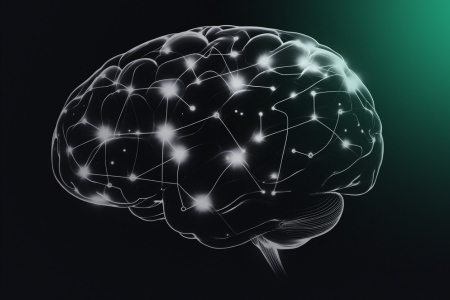
THE artificial neural network (RNA) is, in essence, a a computer system inspired by the structure and function of the biological brain..
Its fundamental goal is to process data through an interconnected web of artificial "neurons," allowing the machine to learn from examples, recognize patterns, and make decisions or predictions without being explicitly programmed for each task.
It is this capacity for adaptation and generalization that makes it the cornerstone of modern artificial intelligence, enabling everything from virtual assistants to autonomous vehicles.
According to defined by AWS, Neural Networks (NNNs) are the foundation of modern cognitive systems. For the No Code entrepreneur, understanding this structure means understanding the potential to automate intelligence in their products.
The Foundational Architecture: Artificial Neurons, Weights, and Layers
At the heart of any artificial neural network is the artificial neuron, or perceptron. Each of these nodes receives one or more data inputs, processes them, and produces an output.
The processing is dictated by weights and by biases — numbers that the network adjusts during the model training. The greater the weight, the greater the influence of that input on the final output.
The strength of RNA lies in its layered organization, composing the neural network architecture:
- Input Layer (Input Layer): It receives the raw data (pixels from an image, words from a text, numerical values).
- Hidden Layers (Hidden Layers): This is where the magic of data processing happens. Each layer applies non-linear transformations to the data from the previous layer.
When a artificial neural network It has multiple hidden layers; it is classified as a model of Deep Learning (Deep Learning).
As explained by Google Cloud, It is this depth that allows us to extract highly complex features and patterns. - Output Layer (Output Layer): It produces the final result, which can be a classification (e.g., "it's spam" or "it's not spam") or a predictive value (e.g., the price of a stock).
The final touch on each neuron is the activation function, such as ReLU or Sigmoid, which introduces non-linearity.
Without her, A neural network would simply be a sum of linear operations., incapable of solving complex real-world problems.
The Learning Process: Backpropagation and Optimization
How exactly is that computational intelligence acquires knowledge? The main process is called backpropagation of errors (Backpropagation).
- Step Forward: The network receives the input data and produces an output (prediction).
- Error Calculation (Cost Function): The network output is compared with the correct answer (Ground TruthThe difference is the mistake.
- Backpropagation (Backpropagation): The mistake is propagated back, from the output layer to the hidden layers.
- Optimization: An optimization algorithm (such as Stochastic Gradient Descent) uses error information to adjust weights and biases across the network.
The goal is to minimize the cost function at each iteration.
This iterative cycle of prediction, error, and adjustment is what allows the artificial neural network refine your predictive models.
Training requires massive volumes of labeled data and computing power, but the result is a machine learning model capable of performing impressive cognitive tasks.

Essential Types of Neural Networks for the Digital Ecosystem
Although the basic structure is the same, the neural network architecture It is adapted to the type of data it needs to process.
Choosing the right architecture is crucial for the successful application of AI algorithms in your product.
Convolutional Neural Networks (CNNs): The Heart of Pattern Recognition
To the Convolutional Neural Networks (CNNs) They are the dominant architecture in everything involving the analysis of images, videos, and signals.
Its main innovation is... convolutional layers, which apply filters to identify spatial patterns, such as edges, textures, or shapes, regardless of where they appear in the image.
- Practical Applications:
- Computer Vision: Facial recognition, object detection (essential for e-commerce or security).
- Information Filtering: Document analysis and data extraction from scanned forms is a huge advantage for automating low-code processes.
- Computer Vision: Facial recognition, object detection (essential for e-commerce or security).
Recurrent Neural Networks (RNNs) and LSTMs: Understanding Sequences and Time
Unlike traditional neural networks, which treat each entry as independent, these Recurrent Neural Networks (RNNs) have memory.
They use the output from the previous step as input for the current step, which makes them ideal for sequential data such as text and time series.
Long Short-Term Memory (LSTM) variations have overcome the limitations of RNNs (such as the vanishing gradient problem)., allowing the network to remember important information for extended periods.
- Practical Applications:
- Natural Language Processing (NLP): Machine translation, intelligent chatbots (based on GPT-3 and similar technologies), and sentiment analysis of customer reviews.
Transformers and the Rise of Predictive Deep Learning
The Transformer architecture, introduced in 2017, revolutionized the Natural Language Processing (NLP) and the computational intelligence.
She solved the problem of slow processing of long RNN sequences by introducing the mechanism of Attention (Attention).
Instead of processing the sequence in order, the Transformer processes it in parallel and, through Attention, allows the network to weigh the importance of different parts of the input sequence for each part of the output.
- Strategic Relevance: This architecture underlies Large Language Models (LLMs) and is the engine of... Generative AI.
If you're building an application that needs to generate code, summarize articles, or create marketing content, you're indirectly using the power of a trained Transformer.
The Low-Code/No-Code Bridge: Implementing Computational Intelligence with Ease
The good news for the No Code Startup universe is that you don't need to program the architecture of the... artificial neural network From scratch.
The democratization of Artificial Intelligence (AI) It's real, and it comes in the form of platforms and APIs that abstract away the complexity of... Deep Learning, offering pre-trained models ready to be plugged into your MVPs.
Democratizing Access to RNA: No Code AI Platforms
The fastest path to innovation is through platforms that package the complexity of AI algorithms in visual interfaces. Modern tools offer features such as:
- AutoML: It allows you to upload your data, and the platform automatically chooses the best one. neural network architecture, trains the model, optimizes hyperparameters, and generates the endpoint API.
- Ready-to-use APIs: Services from tech giants (such as Google Cloud APIs or AWS APIs) offer resources for specific tasks of machine learning, such as optical character recognition (OCR), sentiment analysis, or translation.
- Visual Machine Learning Platforms: You integrate these APIs into your Low-Code flow (via Zapier, Make.com, or natively in tools like...). Bubble) with simple HTTP calls, treating each step (preprocessing, training, inference) as a building block.
This means that, instead of focusing on optimizing the Backpropagation or in frameworks as TensorFlow or PyTorch, The entrepreneur focuses on what really matters: the quality of the data and the business value of the forecast.
Real-world Use Cases for Startups and MVPs
For an entrepreneur, the artificial neural network It is a leverage tool for creating market differentiators.
| AI Use Case | Wrapped RNA Architecture | Business Value (No Code Startup) |
| Customer Rating | Feedforward Networks | Forecast of Lifetime Value (LTV) and automatic user segmentation for personalized marketing. |
| Forecast of Churn | RNN/LSTM | Proactively identifying customers with a high probability of cancellation, allowing for rapid intervention. |
| Optical Character Recognition (OCR) | CNN | Automating data entry reduces operational costs and speeds up internal processes. onboarding. |
| Product Recommendation | Collaborative Networks | Increase average order value and retention through highly relevant product suggestions. |
The use of these predictive models It transforms a passive MVP into an active product, capable of interacting with and learning from user behavior.
Infrastructure and Strategy: Aligning Artificial Neural Networks with Your Business
The true scalability of a product based on Artificial Intelligence (AI) it does not reside solely in the architecture of artificial neural network, but in the solidity of the infrastructure that supports it.
For the No Code Start Up, this translates into a simplified yet robust MLOps (Machine Learning Operations) focused on governance and efficiency.
The Role of Governance and Data Science in Operations
Even with code abstraction, data quality is the primary success factor.
One of the biggest challenges is the algorithmic biasif the artificial neural network If trained with biased or incomplete data, its predictions will be unfair or inaccurate, generating flawed strategic results.
Governance requires:
- Data Curation: Cleanliness, accurate labeling, and ensuring the representativeness of training data.
- Ethics in Implementation: Constant monitoring to ensure that AI algorithms act fairly and transparently, especially in decisions that directly affect the user (such as credit approval or risk rating).
To delve deeper into the foundation that underpins intelligence, it is essential to understand What is AI infrastructure and why is it essential? to maintain the performance of their models in production.
Scalability and Maintainability of Models (Low-Code MLOps)
One machine learning model It is not a static artifact; it undergoes drift (drift) and needs to be retrained. MLOps (a set of practices for deploying models to production and maintaining them) ensures that the artificial neural network Continued accuracy over time.
In a low-code context, this involves:
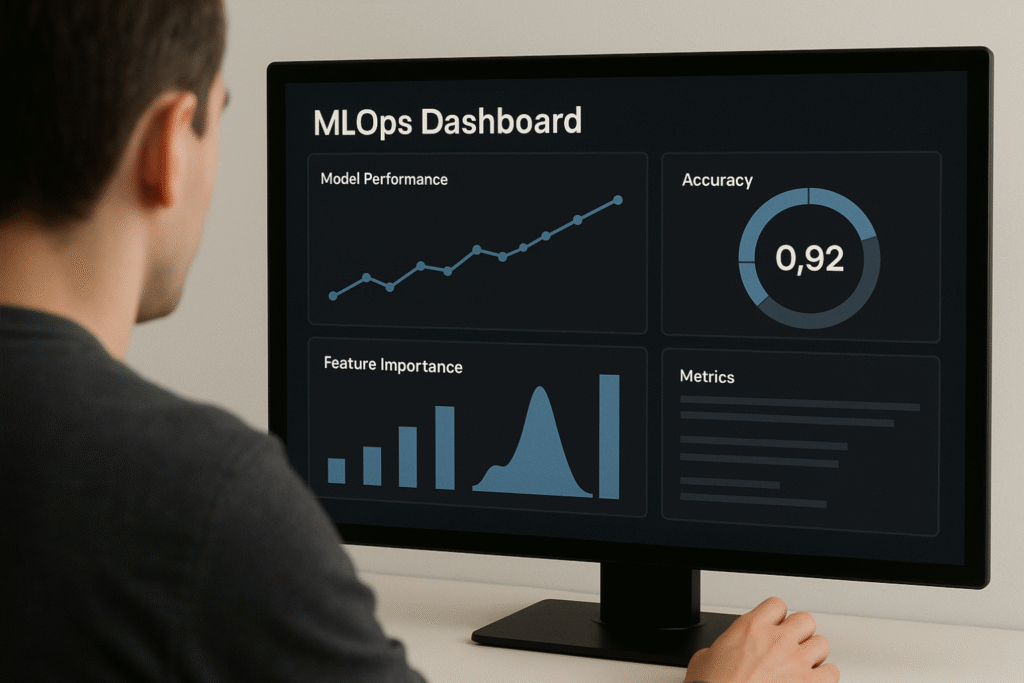
- Performance Monitoring: Using dashboards to track accuracy of artificial neural network and trigger alerts if accuracy falls below an acceptable threshold.
- Retraining Pipeline: Configure automations that, when triggered by data drift, pull new data, retrain the model, and automatically deploy it, all through visual workflows on simplified MLOps platforms.
Maintaining these AI algorithms It ensures that the predictive value of your product is maintained, guaranteeing the loyalty of your users.
Master Artificial Intelligence: The Next Step for the No Code Developer
The journey of a No Code/Low Code developer is a relentless pursuit of leverage.
If previously leverage came from the speed of development, today it comes from the ability to inject computational intelligence native to any software, elevating the product from "merely functional" to "intelligent and differentiated".
Integrating AI Algorithms to Leverage Your Products
The difference between a to-do list app and a Smart To-Do it is artificial neural network. While the first one only records, the second one learns from your habits, predicts which tasks you need to prioritize, and suggests the best time to perform them.
Use AI for no-code data analysis allows you to extract insights profound insights into user behavior that would be invisible to traditional statistical methods.
This is not limited to sales analysis, but extends to interface design, where the artificial neural network You can optimize user flow to increase conversion.
For larger organizations, this evolves into AI and automation agents for businesses, optimizing large-scale operations.
In summary, the artificial neural network It is your greatest strategic asset for creating competitive barriers in the digital market.
Who masters the integration of predictive models and generative technologies dominate the future development of software.

FAQ: Popular Questions
1. What is the difference between Artificial Neural Networks and Deep Learning?
THE artificial neural network (RNA) is the fundamental concept of a computational system modeled after the brain. Deep Learning (Deep Learning) is a specific subset of ANN.
A network is considered to be Deep Learning when it has multiple hidden layers (usually three or more), allowing it to learn data representations at various levels of abstraction and complexity.
Every Deep Learning model is an artificial neural network (ANN), but not every ANN is a Deep Learning model.
2. Do I need to know how to program to use an Artificial Neural Network in my No-Code AI Agent project?
Not necessarily. While development and model training from scratch of a artificial neural network They require programming (Python, TensorFlow/PyTorch), but the use and integration of ready-made models in software projects does not.
No-Code and Low-Code platforms offer integration via APIs ready-made (such as image recognition or NLP) tools or AutoML tools that allow training machine learning models from data in visual interfaces, without the need to manipulate the code of AI algorithms.
3. What is the cost of training an Artificial Neural Network model from scratch?
The cost of training a model of artificial neural network (especially if it's a model of Deep Learning The cost of a major like an LLM is high and can range from thousands to millions of dollars, depending on the volume of data, the complexity of the model, and the computing time on specialized hardware (GPUs and TPUs).
However, the vast majority of Low-Code entrepreneurs use pre-trained models (or smaller models via AutoML) that have already been created by third parties.
In these cases, the cost is only that of inference (the use of the model in production), which is extremely low cost and scalable, generally charged per API request.
4. Where is Artificial Neural Networking most used in the technology market today?
THE artificial neural network It is ubiquitous. Its main areas of application are: Computer Vision (security, medical diagnosis, autonomous vehicles, social media filters via CNNs), Natural Language Processing (NLP) (translators, chatbots, generative AI via Transformers), Recommendation Systems (Netflix, Amazon), finance (fraud detection, market forecastand Health Sector (drug discovery and test analysis).
The Future of Development is Integrated Intelligence
We've reached the crucial point. artificial neural network It's not a technological luxury, but the new growth engine for any startup that aspires to be relevant.
Did you see the neural network architecture, understood the semantic variations as Deep Learning and AI algorithms, and discovered the No Code levers to implement them.
The challenge now is execution: taking the theory and transforming it into products that generate predictive value for the end user.
The developer who masters the art of integrating this computational intelligence In its softwares, it will be the catalyst for the next wave of innovation. It's not enough to just build; you need to build with the capacity to learn.
If you're ready to transcend functional development and dive into creating softwares with machine learning Native, the best way to start is by acquiring the right methodology.
The next logical step is to master the practical application of AI in development. Take the leap in quality your startup needs to deliver what the market expects. Discover the AI Coding Training Program and Create Software with AI and Low-Code..

















 EN
EN  PT
PT  ES
ES 