


Today I want to show you a complete comparison between the Lasy AI, Ruyter's new app, and the Lovable, one of the most well-known tools in the universe Vibe Coding.
Lasy AI's proposal is bold: to allow anyone to create a website or application simply by describing what they want, with the help of... AI (Artificial Intelligence). The idea is promising.“But does it work as well as promised?“
Overview of the platforms
Right off the bat, I noticed that the platform follows the same line of tools as Lovable, Cursor, Bolt and ReplitYou describe the idea, send screenshots, and quickly have a functional prototype. The positive aspect is its practicality; the negative is the limited control over the code.

When it came time to test it, I opted for the plan. Pro (R$197), since the Starter does not allow integration with Supabase, It doesn't even remove the watermark. Another downside is that it doesn't offer a free version, which is a drawback for those who just want to try it out.
Even so, I went in, tested it, and paid to see what Lasy AI really delivers in practice.
Creating an inventory management application (with Supabase)
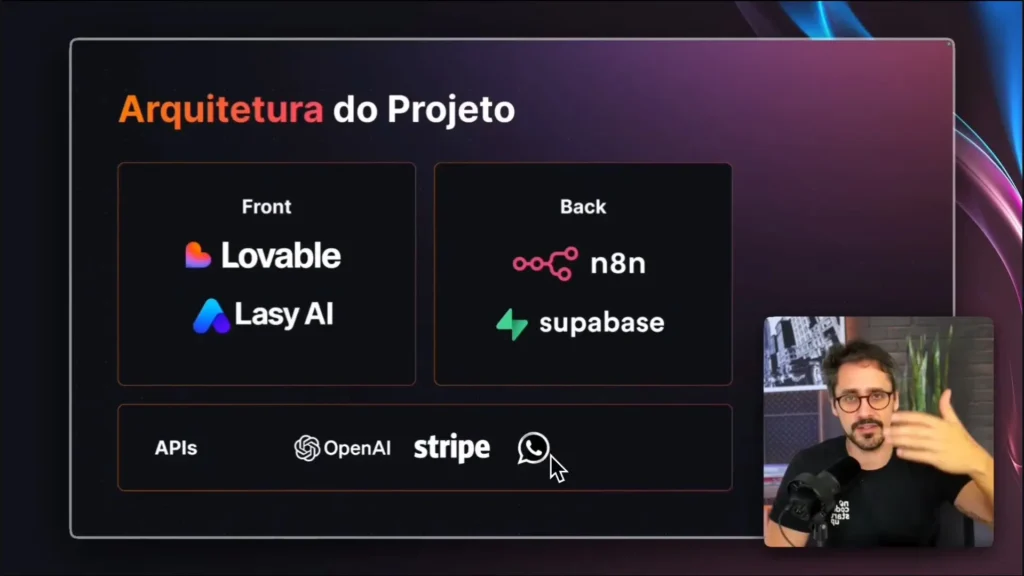
After testing out the creation of a simple website, I decided to go further and create a... inventory management application cell phones, connecting with the Supabase, which is responsible for the database, authentication, and security aspects.
The idea was to assemble the same project on both platforms (Lasy AI and Lovable) using exactly the same prompt. Therefore, I could compare the results based on performance, design, and integration.
At Lovable, everything went very smoothly. In less than 5 minutes, the application was ready: control panel, product registration, editing and deletion, stable connection with Supabase, and a clean and functional layout. The system also allowed viewing average order value, total value, and graphs showing product distribution.
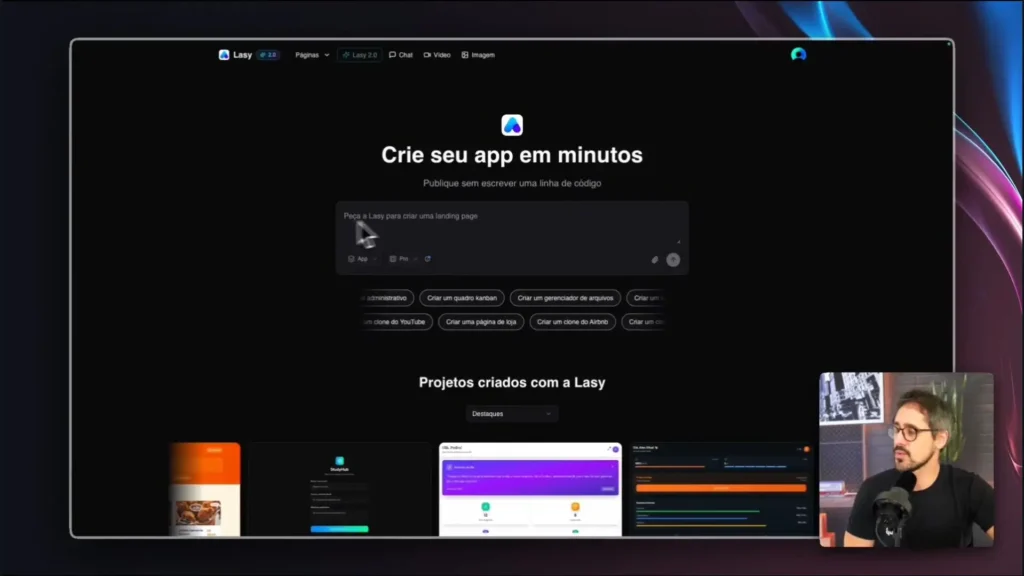
At Lasy AI, the scenario was completely different. The platform took more than 20 minutes to generate the project and presented several login errors and crashes. Even after redoing the flow and correctly configuring Supabase, the connection failed several times, and the login page even disappeared during the test.
These problems indicate that, while Lasy AI's proposal is good, its execution still needs to mature.
Practical tip: Whenever creating apps with AI, follow a structured methodology. prompting. I use the model. PRD Prompt, This process starts with identifying the problem, defines the solution, and details users and functionalities. This avoids frustration and improves results.
Practical results, drawbacks, and pitfalls to avoid.
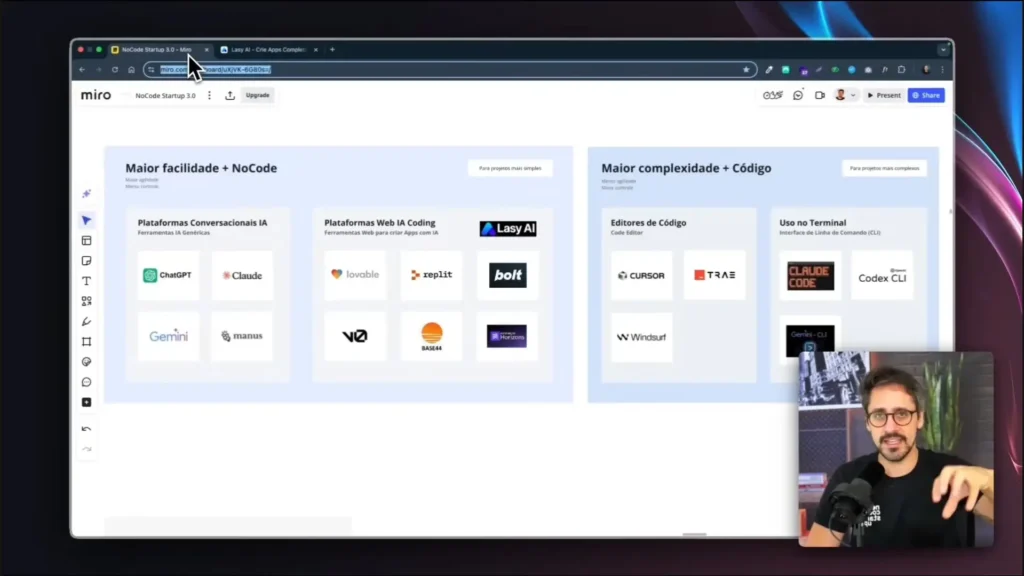
After placing the two platforms side by side, it became clear: Lovable remains the most stable and reliable option for creating AI-powered projects..
THE Lasy AI It stood out positively in terms of price and credit usage, but failed in its integration with Supabase and user experience. The long loading times and constant errors made the process tedious.
Another trap I noticed is aggressive marketing. After payment, several pages appear... upsell, offering extra features and paid bonuses. This is common in digital marketing strategies, but it may sound excessive for those who are just looking to test the tool.

In the final comparison:
- Price: Lasy AI is competitively priced, but there is no free trial.
- Speed: Lovable created the app in 5 minutes; Lasy AI crashed after 40.
- Integration: Lovable is fluid; Lasy AI requires manual key configuration.
- Stability: Lovable ran without errors; Lasy AI was unstable.
In the end, the Lovable Keep going, especially for those who want to build complete apps systems and connect them with... Supabase, n8n or other tools without wasting time on technical glitches.
Learn more: visit the Free Lovable Course or delve deeper into automation with the n8n.
Final tip

Many people believe that it's possible to become a millionaire with AI by creating apps in minutes, but the truth is that... This requires work, method, and business acumen..
AI today greatly facilitates development, but it alone does not build a successful business. Mastering marketing, content, finance, and market validation is also essential.
Another important point is the MVP (Minimum Viable Product). First, create a simple version of your idea, validate it with real users, and only then invest in something more complex. This avoids wasting time and energy.

















 EN
EN  PT
PT  ES
ES 