


Launched in November 2024 by Anthropic, the Machine Communication Protocol (MCP) has transformed the way... AI agents They interact with online services.
Instead of programming each API call, you describe functions In a JSON manifest, the agent executes everything automatically.
N8N incorporated native support for MCP, allowing you to publish or consume servers without writing code.
In this tutorial, you will understand why MCP is considered revolutionary, when it's worth adopting, and how to test it in a real-world workflow.
Contents
1. Why is MCP revolutionary?
MCP directly connects AI agents to services, eliminating manual programming steps and enabling conversations to create customers, issue invoices, or read spreadsheets in real time.
The adoption by companies like Stripe indicates that this communication model is likely to become the standard in the coming years.
2. The three phases of evolution of AI agents
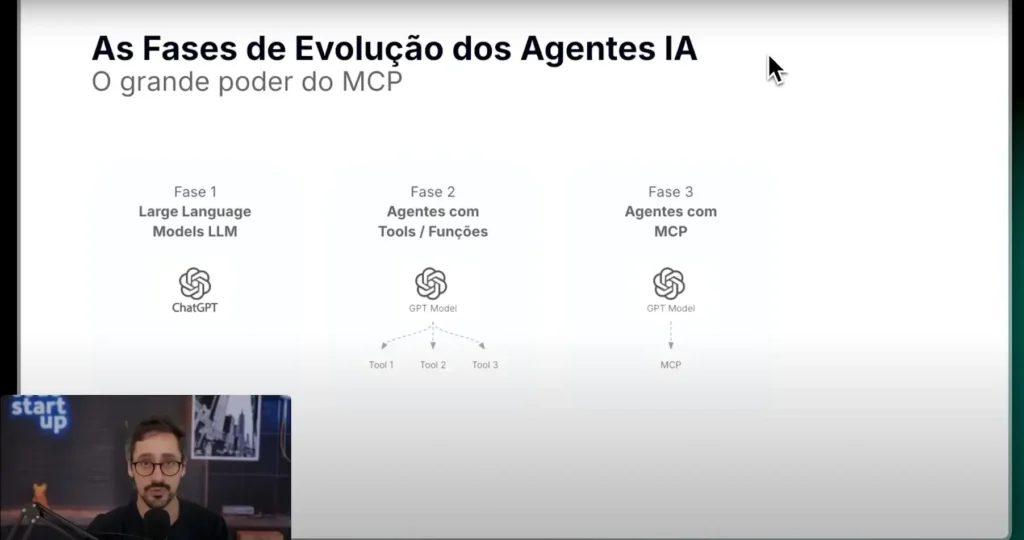
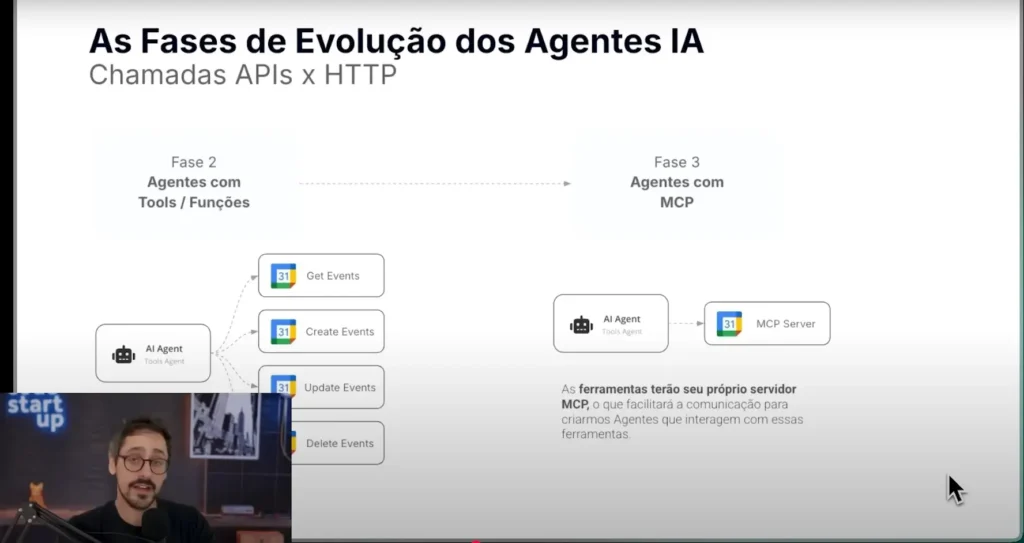
- Accessing APIs via code: The developer writes all the HTTP requests.
- Built-in tools: Platforms expose internal functions ready for the model.
- Open Protocols (MCP): Any documented service becomes plug-and-play, allowing for near-instantaneous scalability of capabilities.
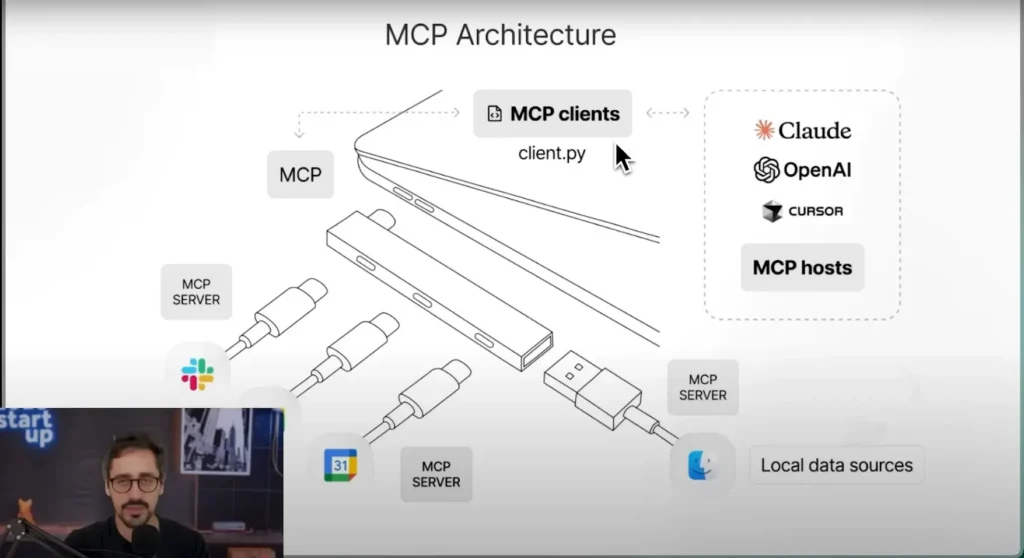
3. What is MCP and how does it work?
The MCP is essentially a specification that describes functions, required parameters, and usage examples in a JSON file.
When the agent reads this manifest, it knows exactly which call to make and how to handle the response, without any additional instructions in the prompt.
In other words, the manifest replaces the need for custom code: simply update the file and new functions become available, while the error and authentication logic remains centralized.
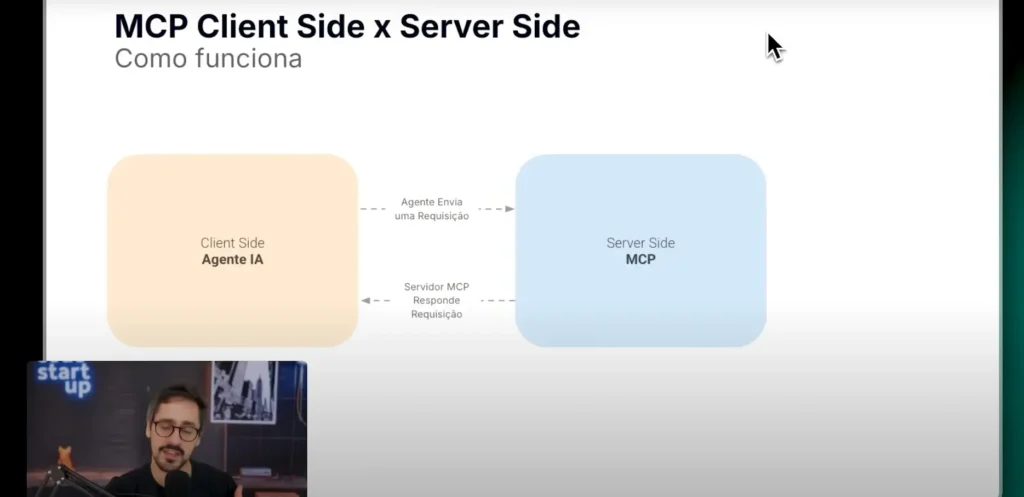
4. Difference between MCP Client and MCP Server
| Paper | What it does | When to use |
| Client | Consumes manifestos published by third parties. | You want to quickly access features from external services (e.g., create payments in Stripe). |
| Server | Publish your own manifesto. | It needs to expose internal processes — from CRM to ERP — as functions that any agent can access. |
5. Benefits of using MCP in AI projects
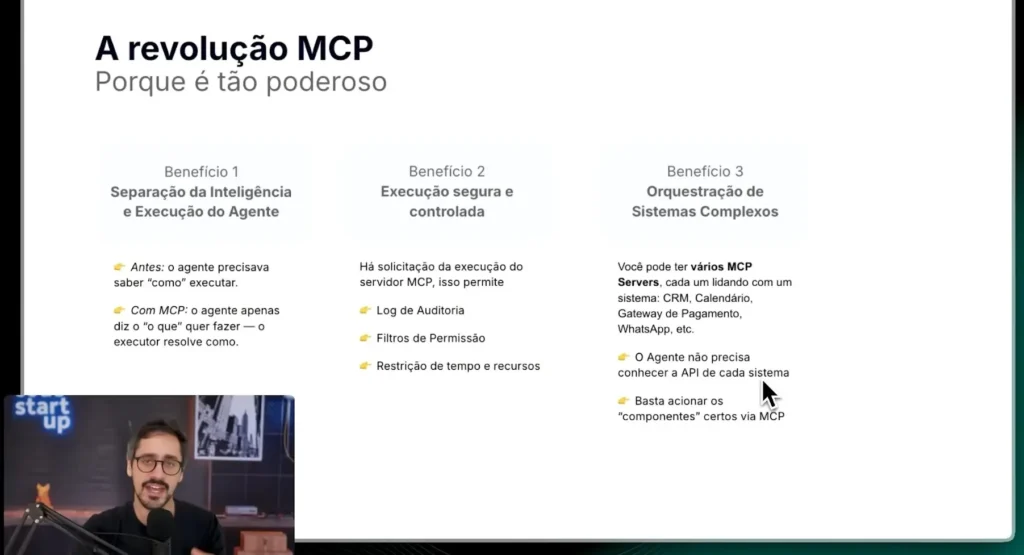
Adopting MCP reduces code maintenance, standardizes inputs and outputs, facilitates governance (you define only the allowed actions), and accelerates prototyping.
Adding or removing features becomes a simple edit to the manifest, without impacting existing prompts or flows.
6. Comparison: Traditional API vs. MCP
| Aspect | Conventional REST API | MCP |
| Target audience | Human developers | AI Agents |
| Documentation | Swagger/OpenAPI | Function-oriented manifesto |
| Intention → action | Manual conversion (code) | Automatic by model |
| Updates | They depend on developers. | All that's needed are adjustments to the manifesto. |
7. Tools with MCP support
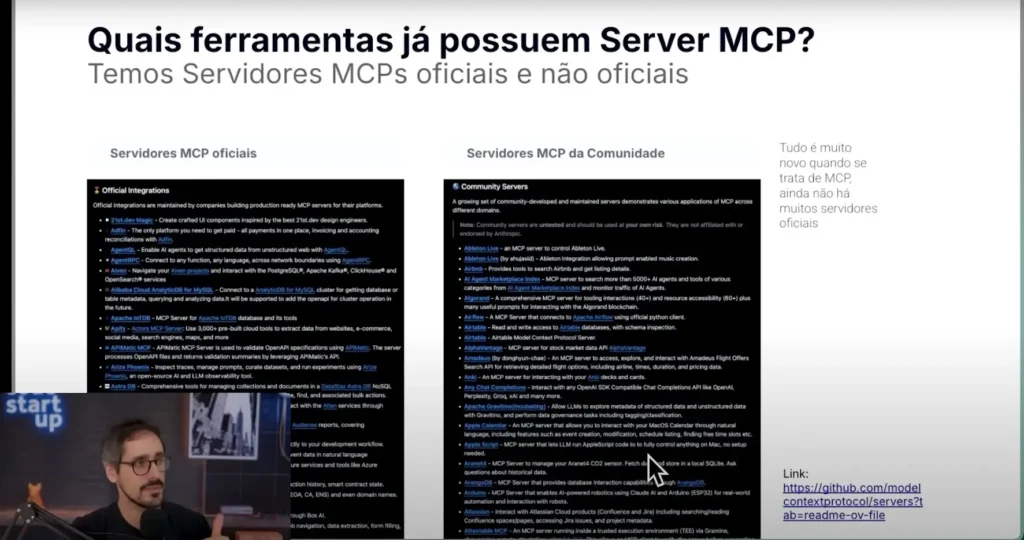
Major players already offer official support. Stripe publishes its manifesto for billing operations; Anthropic has enabled direct use in... Claude; the GitHub Test the protocol in code-assist extensions.
In addition, the community maintains connectors for Google Sheets, Notion, and HubSpot. To monitor all of this, projects like LangSmith provide a complete overview of MCP flows, allowing you to debug each call in detail.
8. How does N8N integrate with MCP?
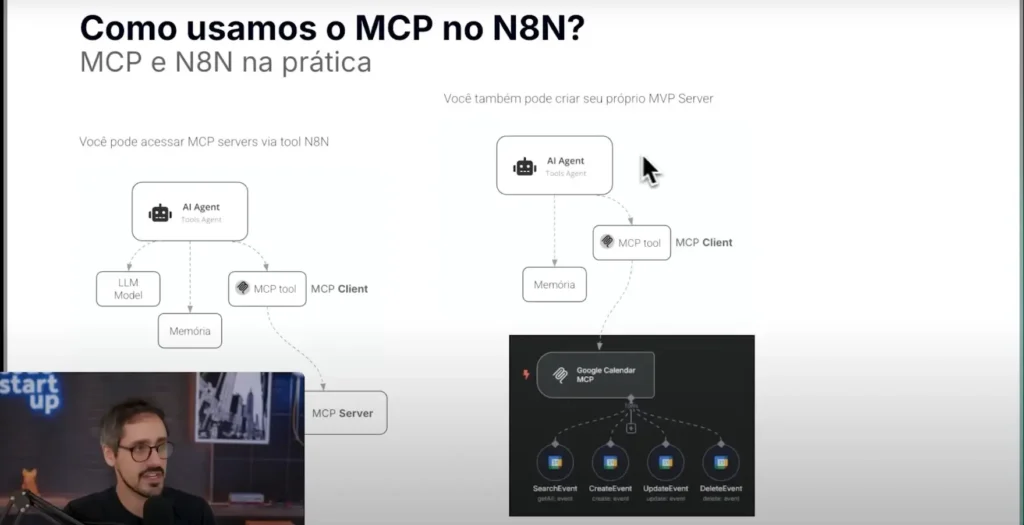
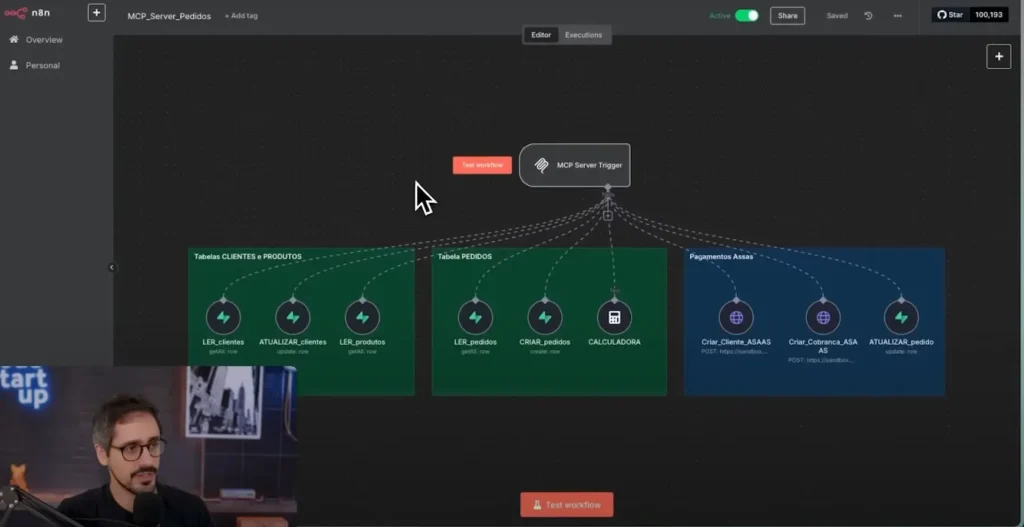
In mode Client, just point the N8N to an external manifest and create an already configured HTTP node. In mode Server, You select any node (or even an entire workflow), define its name, description, and arguments, and N8N automatically generates the JSON manifest.
This file can be hosted locally (low response time) or published on the web for consumption by other agents or tools.
9. Advantages and disadvantages of creating your own MCP Server
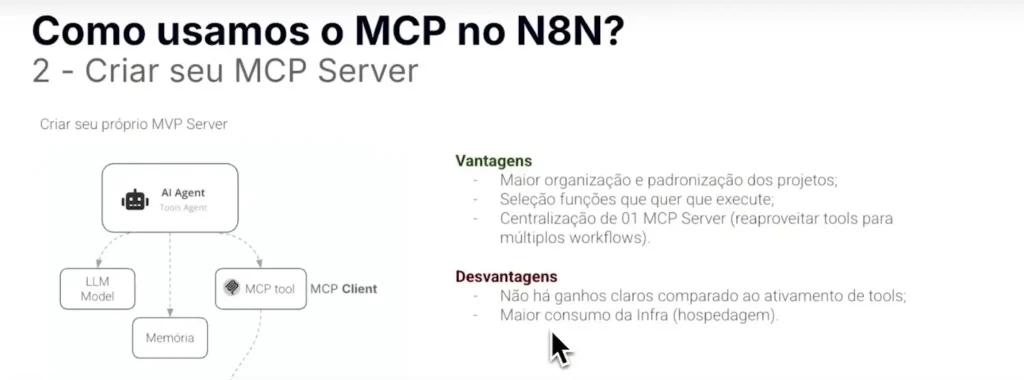
Building your own server puts you in control of versioning, security, and usage limits. The downside is overhead: each call goes through your infrastructure, requiring monitoring, scaling, and caching policies to avoid latency or unnecessary costs.
If the function officially exists in another service, it might be simpler to consume the manifest already maintained by the provider.
10. Practical example: sales agent using MCP Server
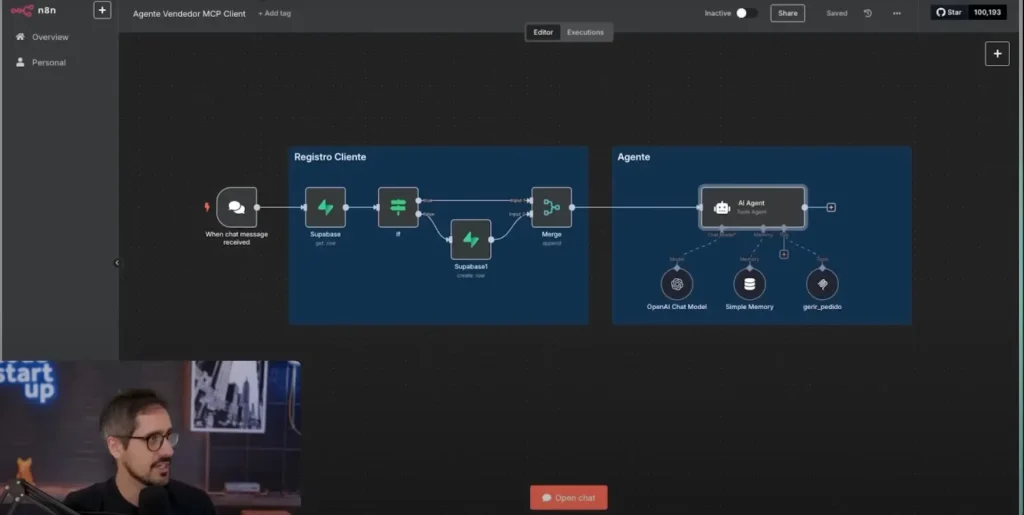
- In N8N, create three functions: createLead, Generate Proposal and sendInvoice.
- Publish them as MCP Server.
- Connect an agent (Claude or GPT-4o) via MCP Client.
- During the conversation, the agent collects customer data, calls createLead, The process generates the proposal and returns a payment link created by enviarInvoice to the user. The entire flow happens in seconds, without a single line of additional code.
Final considerations
MCP already produces real gains in agility and maintainability, but it's not mandatory in all scenarios. Before adopting it, assess whether the technology solves a concrete problem, test it in small processes, and only then expand its use.
If you need a starting point, host a local manifest on N8N, connect your preferred agent, and observe how the automation behaves.
Keep studying:
















 EN
EN  PT
PT  ES
ES 