
The concept of Vibe Coding Vibe Coding is revolutionizing the way developers and digital creators approach their projects. By blending development techniques with emotional, aesthetic, and creative aspects, Vibe Coding proposes a new paradigm in which the experience of creating is as important as the final product.
Market research indicates that teams that adopt sensory creative processes register significant leaps in productivity and well-being — some studies even suggest increases of up to 47% when the developer experience includes emotional dimensions.
THE Harvard Business Review, Similarly, it is highlighted that work experiences enriched by emotional factors significantly boost performance.
In this article, we'll explore what Vibe Coding is, how to apply it in practice, recommended tools, real-world examples, and the future of this trend. Get ready to dive into an approach that combines code, art, and sensitivity.
Contents
What is Vibe Coding?

Vibe Coding is a software development approach that values the creator's subjective experience, creative flow, and aesthetic harmony during the construction of digital solutions.
Unlike traditional development, which focuses exclusively on performance, scalability, or technical standards, Vibe Coding seeks a balance between functional code and the aesthetic pleasure of creating it.
Inspired by movements such as creative coding Influenced by no-code/low-code culture, Vibe Coding allows developers to transform their process into a sensory and emotional experience.
This approach has been gaining traction, especially among designers, creative freelancers, and founders of startups, who see aesthetic freedom as a way to generate innovation.
Fundamentals and Principles of Vibe Coding
Vibe Coding is based on Four essential pillars—emotion, functional aesthetics, real-time collaboration, and developer well-being—simultaneously guide the technique and intention behind every line of code..
These pillars translate into concrete practices such as team satisfaction metrics, feel-driven design, adoption of shared visual pipelines, and creative break rituals to sustain the... flow.
The report Creative Trends 2025, Adobe's study shows that teams incorporating these fundamentals achieve significant leaps in prototype approval rates in the first round—reaching around 30% according to the study—demonstrating that creativity can be treated as a tangible business framework.
Emotion as a Guide to Development
The creator's emotional state directly influences the choices of interface, colors, micro-interactions, and experiences offered.
According to Flow Theory, Deep immersion states foster more creative solutions, reinforcing the idea that aligning emotion and coding is not only aesthetic but also scientifically recommended.
Vibe Coding encourages developers to consider their emotions in order to create more human and empathetic applications.
Creative Freedom
By abandoning such strict rules of conformity and allowing experimentation, Vibe Coding invites the creator to explore the "feeling" behind what they are building. Beautiful code is also effective code.
Intuitive Tools
Choosing tools that offer real-time feedback and visual support for the creative process is essential. Platforms such as Framer, FlutterFlow and WebWeb These are perfect examples.
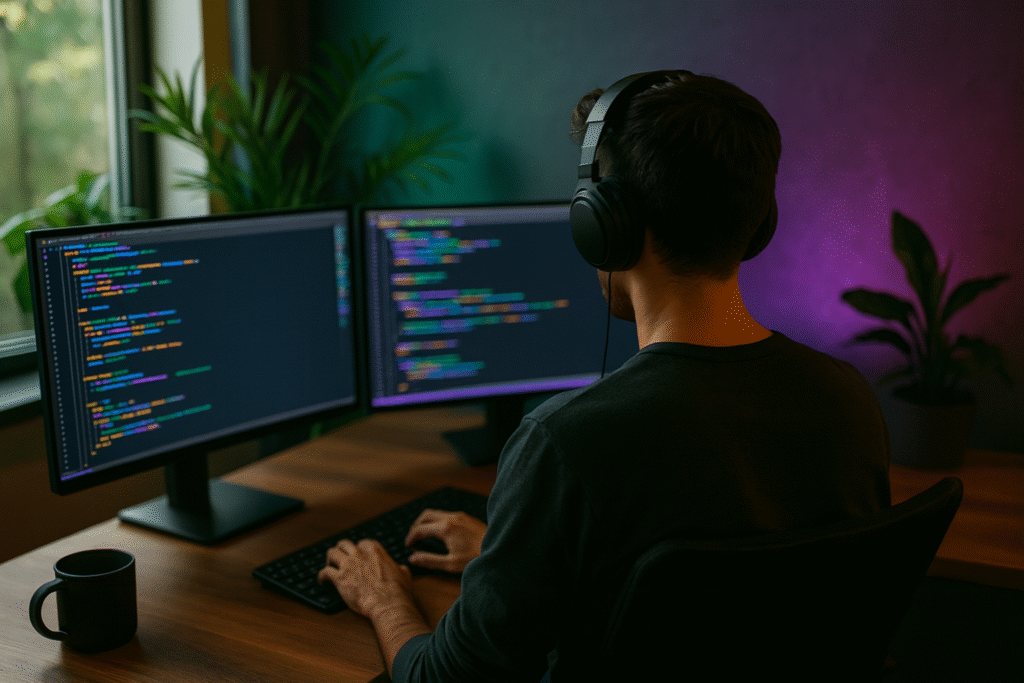
How to Apply Vibe Coding in Practice
To apply Vibe Coding to your projects, start by adjusting your mindset: prioritize feelings, colors, flow, and visual identity from the beginning. The process isn't linear, and that's intentional. Here are some ways to get started:
Choose Visual Platforms
no-code tools such as Bubble and AppGyver They allow you to create without worrying about syntax, focusing on the visual and interactive experience.
Create Living Prototypes
Use subtle animations, harmonious transitions, and custom color palettes. Sites like Lottie Files They offer visual resources that help enrich your project.
Follow Your Flow
Tools like Notion or Whimsical They help capture creative ideas in real time, keeping the process fluid. Vibe Coding requires actively listening to your internal state.
Use IDEs and Environments with Enhanced Experience
Another practical way to incorporate Vibe Coding is to use modern development environments and tools that stimulate creative flow.
IDEs such as Cursor, with integrated AI assistants and a clean interface, or tools like the Lovable, Companies focused on building emotional relationships with digital products are powerful examples.
These solutions enhance the developer experience and strengthen the connection between intuition, design, and technical execution.
Tools and Ecosystem Favorable to Vibe Coding
The choice of stack directly influences the creative experience. The Vibe Coding ecosystem values platforms that encourage rapid prototyping, instant feedback, and intuitive interfaces.
- FramerIdeal for projects focused on animation and visual storytelling.
- FlutterFlow: allows you to create complete apps boards with visual sensitivity.
- DifyGreat for integrating with AI and building fluid interfaces.
- Xano: enables backend development without sacrificing creative freedom. For a detailed comparison of these and other options — including IDEs like Cursor and emerging platforms — check out our article '‘best Vibe Coding tools’.
Check out Training SaaS IA NoCode From the No Code Startup to mastering these tools with real-world applications.

Real-life Cases and Inspiring Projects
Many creators have applied Vibe Coding to their projects with impressive results. One example is the use of FlutterFlow by freelancers to create interactive portfolios that convey personal identity.
Another example is founders who build MVPs with WeWeb + Xano, prioritizing emotional design to engage early adopters.
Agencies are also adopting this approach. In a recent interactive installation at MoMA In New York, curators used openFrameworks to program projections that reacted to audience movement, exemplifying how Vibe Coding goes beyond the digital and creates physical artistic experiences.
The ability to create quickly, beautifully, and with impact is a competitive advantage. For teams, Vibe Coding encourages creative collaboration and reduces friction between design and development.
Read also:Prompt Engineering: A Complete Guide to Conversing with AIs
Future Trends: What to Expect from Vibe Coding
With the rise of no-code/AI tools, Vibe Coding is expected to become a key pillar of digital creation. Integration with AI agents that creatively assist in design will become increasingly common.
The trend also suggests the emergence of platforms that prioritize the joy of creation, and large corporations are already signaling this transition.
IBM, through its initiative Design Thinking, introduced guidelines that emphasize empathy and emotion as quality criteria for corporate software, with interfaces adapted to the user's emotional style.
More than functionality, the difference will lie in the feeling conveyed by each interaction.
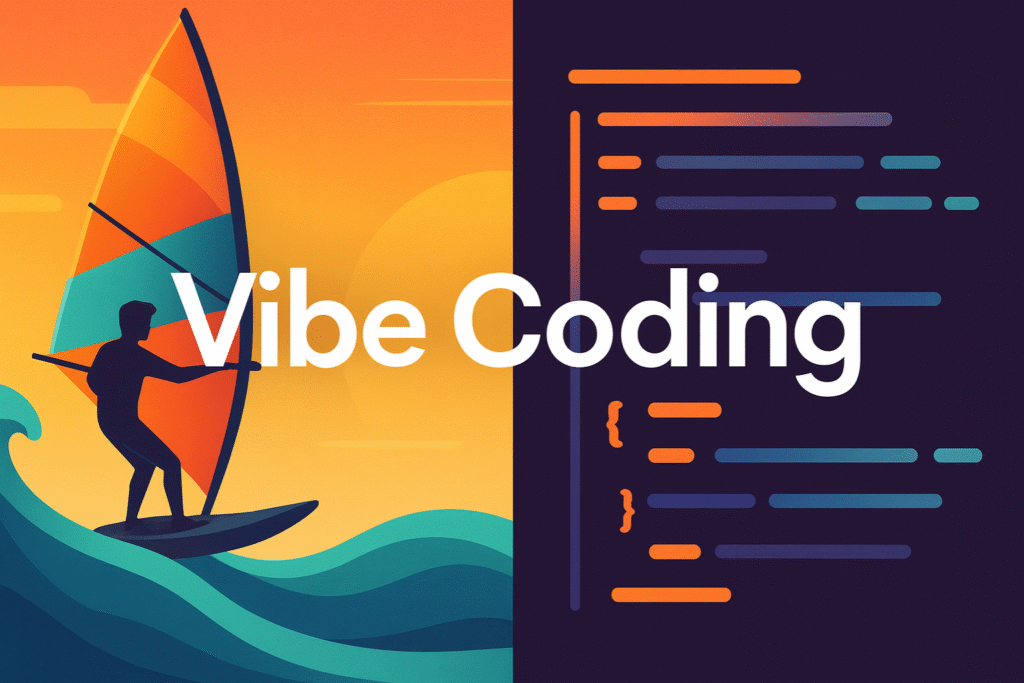
Vibe Coding is Much More Than Style: It's a New Way of Creating
Adopting Vibe Coding means embracing a future where code is not just execution, but expression. Modern tools like Framer, FlutterFlow, Dify, and Xano are making this reality accessible.
By aligning technology, sensitivity, and identity, you create more human and memorable experiences. Ultimately, what makes a project memorable is not just what it does, but how it makes you feel.
Continue exploring: No Code Start Up Dify Course













 EN
EN  PT
PT  ES
ES