

If you've ever wondered what an API is and why it's so important in the tech world, especially on NoCode and Low Code platforms, this article is for you.
In an increasingly integration-driven ecosystem, APIs are the backbone that connects applications, data, and services in an automated, efficient, and scalable way.
The keyword "API" (Application Programming Interface) is present in solutions ranging from automation tools such as make up and n8n even robust backend platforms like Xano.
This article will show you everything you need to know to master this essential concept.
What is an API?
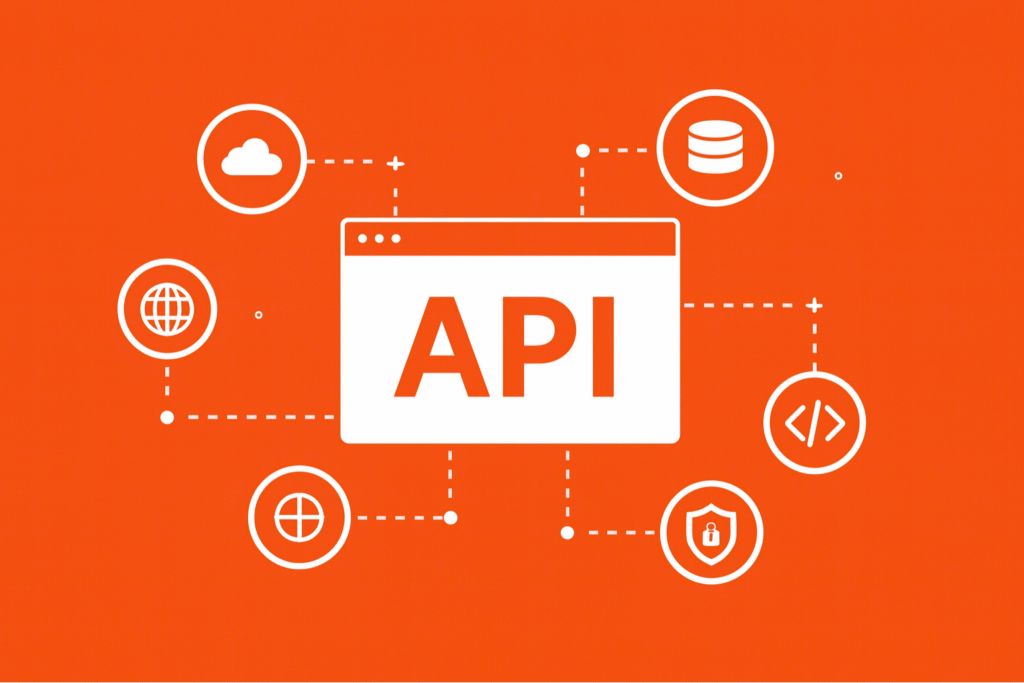
API stands for Application Programming Interface, or in Portuguese, Application Programming Interface.
In simple terms, an API is a set of rules and definitions that allows two systems to communicate with each other.
Imagine you're in a restaurant: you're the user, the menu is the interface (API), and the kitchen is the system that processes the orders.
You don't need to know how the food is made; simply use the menu to order what you want.
In the digital world, this is what APIs do: they receive requests, send them to the system that processes them (backend), and return the results (responses).
Webhooks vs APIs: understand the difference
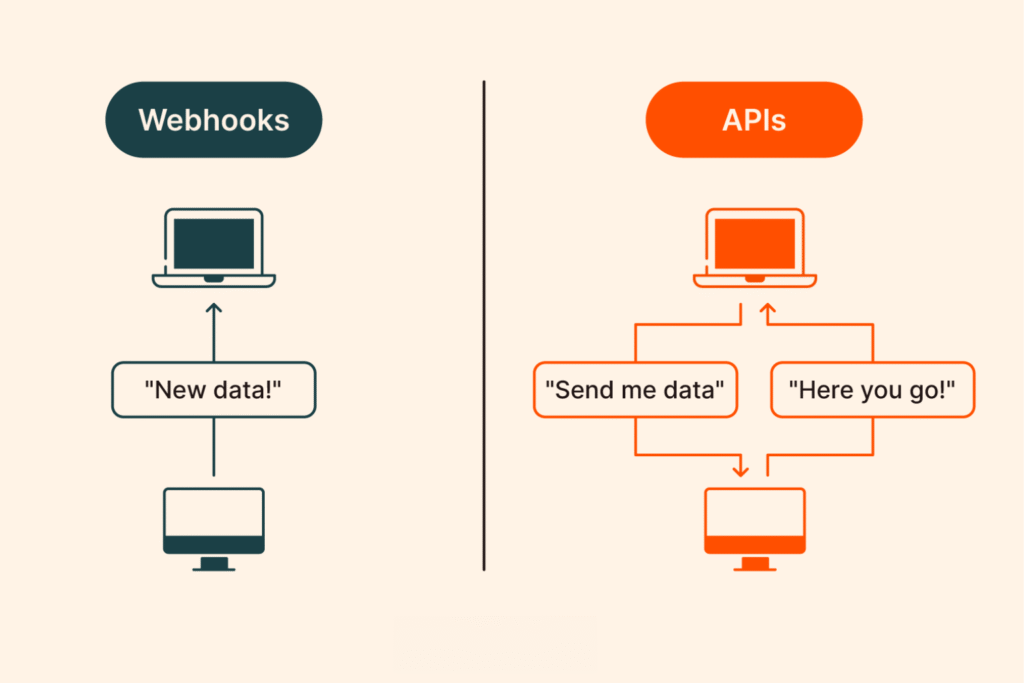
Despite being closely linked, Webhooks and APIs They have fundamental differences:
Webhooks: the reactive system
One webhook It is an automated notification sent from one system to another as soon as an event occurs. In other words, it is... reactive.
For example, whenever a new order is placed on an e-commerce site, the system can use a webhook to immediately notify the delivery app.
API: the proactive system
An API, on the other hand, is used when you want to query or send data on demand. It is... proactive, Because you need to make the request.
Platforms like Zapier and Integramat/Make They offer support for both API calls and webhooks.
Why are APIs essential for NoCode projects?
Most NoCode platforms such as Bubble, FlutterFlow and WebWeb They offer native functionalities for consuming REST APIs.
This allows even those who are not developers to:
- Retrieving real-time data from external systems (e.g., weather, currency exchange rates)
- Send data to CRMs, ERPs, or internal automation systems.
- Create AI-powered workflows using API integrations with platforms like OpenAI, Dify, and HuggingFace.
In SaaS IA NoCode Training, For example, you learn how to build entire SaaS systems by integrating APIs in a modular and scalable way.
API Structure: Endpoints, Methods, and Authentication
Endpoints
You endpoints These are like specific URLs within an API. For example:
GET https://api.meusistema.com/usuarios
This endpoint returns the list of users.
HTTP Methods
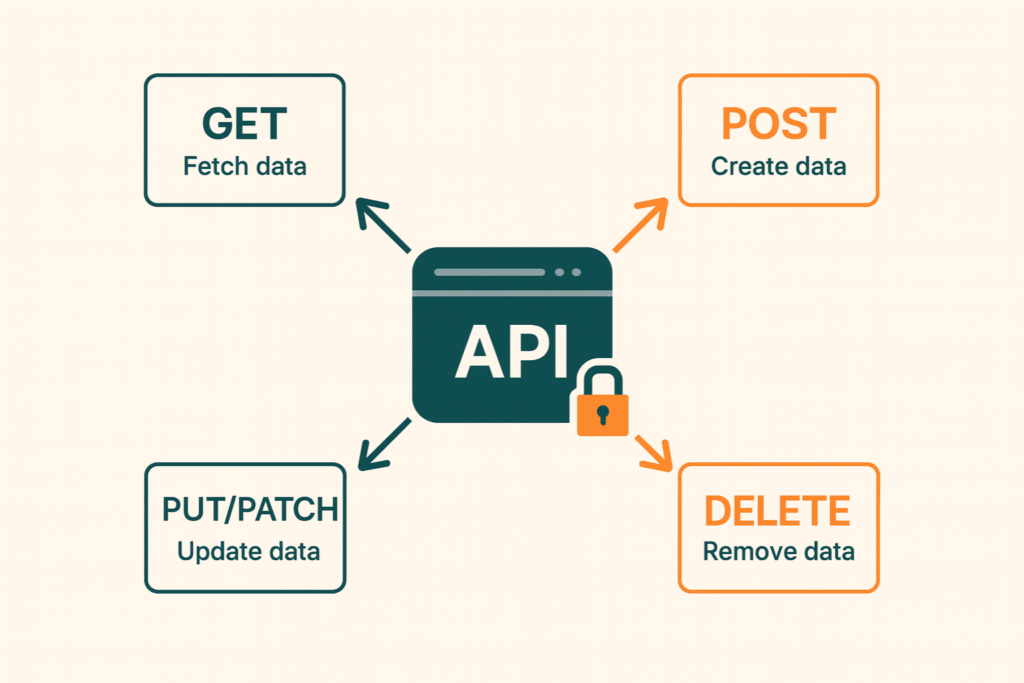
APIs typically use the following HTTP verbs:
- GET: retrieve data
- POST: create new data
- PUT / PATCH: update existing data
- DELETE: remove data
Authentication
Most APIs require some type of authentication, such as:
- API Key
- OAuth 2.0
- JWT (JSON Web Token)
This ensures that only authorized users can access the resources.
No-code tools for consuming APIs.
Several tools allow you to integrate APIs without writing code:
Make (Integromat)
It allows you to create complex automation scenarios and consume REST APIs using HTTP modules.
Bubble
There is a native plugin called “API Connector”"to configure calls to external APIs with support for headers, methods, and tokens.".
n8n
Open source and highly customizable, with robust support for authentication, data manipulation, and conditional execution.
Xano
In addition to being a backend-as-a-service, it allows consuming external APIs directly from workflows.
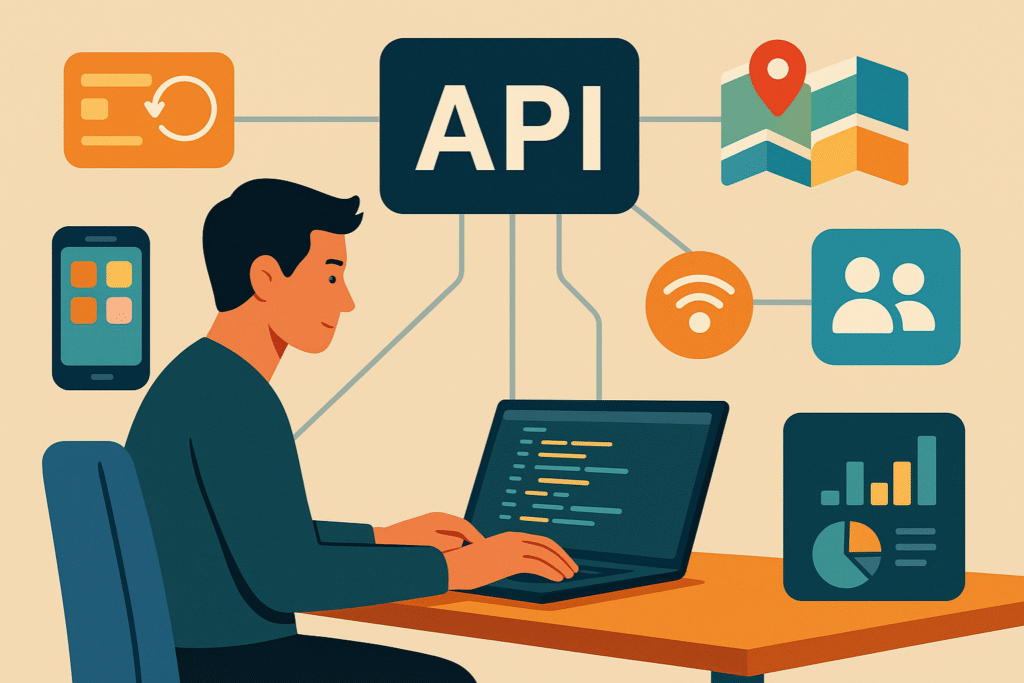
Practical examples and use cases with APIs
Imagine a delivery app built in FlutterFlow. You can integrate:
- Google Maps API for routing
- Payment API as Stripe or Mercado Pago
- SMS API for real-time notifications
Another example: a business dashboard built on WeWeb can pull real-time data from a database via Xano and cross-reference it with BI APIs like Power BI or Google Data Studio.
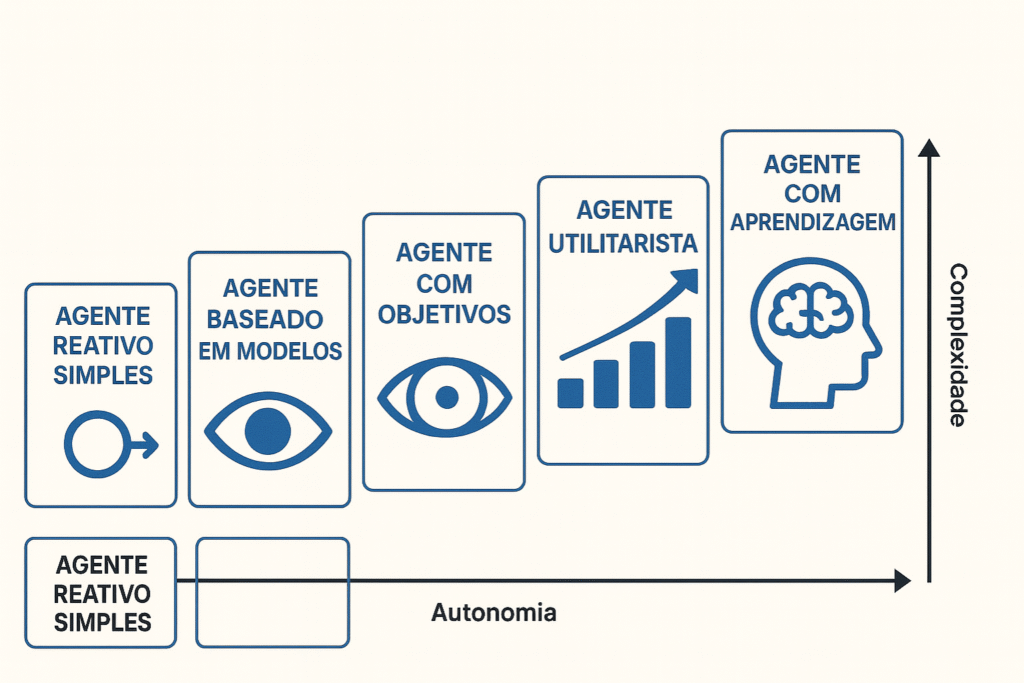
In AI Agent Manager Training, In this course, you learn how to orchestrate intelligent agents that consume APIs to make autonomous decisions.
The Future of APIs: AI, Automation, and Service Composition
The future of APIs is strongly connected to Artificial Intelligence and microservices architecture.
Tools like Dify They are democratizing access to creating agents that already consume APIs by default.
The concept of "API-first" is becoming increasingly common, where systems are built with integrations in mind first.
According to the Report State of the API 2024 from Postman, 48% of those interviewed intend to increase and 42% maintain your investments in APIs — a sum that exceeds 89% and indicates a strong growth trend, especially in generative AI and enterprise automation initiatives.

Mastering the use of APIs with Intelligent Agents
Now that you understand what an API is, its practical applications, and how to consume them on No-Code and Low-Code platforms, you're ready to take it a step further: integrating intelligent agents that use APIs to automate processes and make autonomous decisions.
APIs are not just connectors between systems, but true catalysts for efficiency and scale in your digital projects.
By combining them with AI and visual tools, you significantly expand the potential of any digital solution.
Access the AI Agent Manager Training to master this new generation of intelligent automations with APIs, without needing to program.
















 EN
EN  PT
PT  ES
ES 